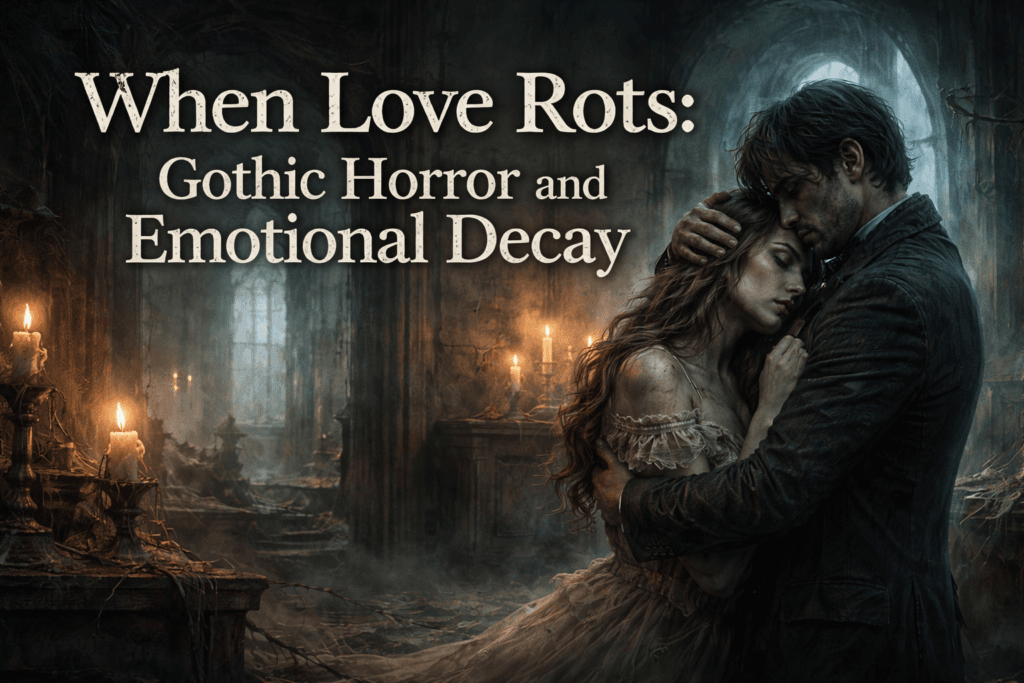
Love rarely collapses all at once.
More often, it changes texture. It grows heavy. It tightens. What once felt nourishing begins to corrode quietly from within. Gothic horror has always understood this transformation, which is why gothic love decay sits at the heart of the genre’s most unsettling stories.
In these narratives, love does not vanish.
It remains—and that is the problem.
Affection lingers. Devotion persists. Yet something essential begins to break down beneath the surface. The characters sense it, but struggle to name it, because nothing has ended. The relationship still exists. The bond still functions. However, it now extracts more than it gives.
The dread here does not come from loss.
It comes from continuation.
Gothic Love Decay as Corrosion, Not Loss
Gothic horror rarely treats love as something that simply disappears. Instead, it focuses on gothic love decay—the slow corrosion of intimacy that continues to demand loyalty long after it stops providing safety.
Unlike stories of heartbreak or abandonment, gothic emotional horror centres on relationships that persist past their expiration date. The structure remains intact even as the interior collapses.
Conversations still happen.
Rituals still repeat.
Yet each interaction feels slightly more strained than the last.
Because nothing dramatic occurs, resistance feels unnecessary. Leaving requires justification. Staying, meanwhile, feels responsible.
Gothic horror dwells in this hesitation, because hesitation keeps people exactly where decay can do its work.
Why Gothic Horror Distrusts Romance
Gothic horror does not reject romance outright. Instead, it examines how love can transform into obligation without ever announcing the change.
In gothic love decay, devotion becomes duty. Care becomes surveillance. Intimacy becomes expectation. These shifts occur slowly enough to avoid detection, which makes them far more damaging.
This perspective does not emerge from cynicism.
It emerges from observation.
Gothic horror understands that love can enclose as effectively as walls. When affection tightens into control, the damage feels difficult to name because it still wears the language of care.
The reader recognises this discomfort immediately—not because it is extreme, but because it is familiar.
The Gradual Shift From Comfort to Constraint
Emotional decay never begins with cruelty.
It begins with accommodation.
One partner compromises more often. Another grows accustomed to being centred. Over time, balance disappears. Boundaries soften, then dissolve. Autonomy becomes negotiable.
Because gothic love decay progresses incrementally, it avoids triggering alarm. The characters explain away discomfort. They blame circumstance, grief, or loyalty. Leaving feels excessive. Staying feels correct.
Gothic horror traces this erosion carefully, because it understands that submission rarely arrives through force. It arrives through patience.
Reflection and the Loss of Emotional Identity
Few gothic symbols express emotional decay more effectively than the mirror.
Reflection suggests truth. Yet in gothic horror, reflection distorts. Familiar features feel foreign. Emotional responses feel rehearsed. Identity becomes unstable.
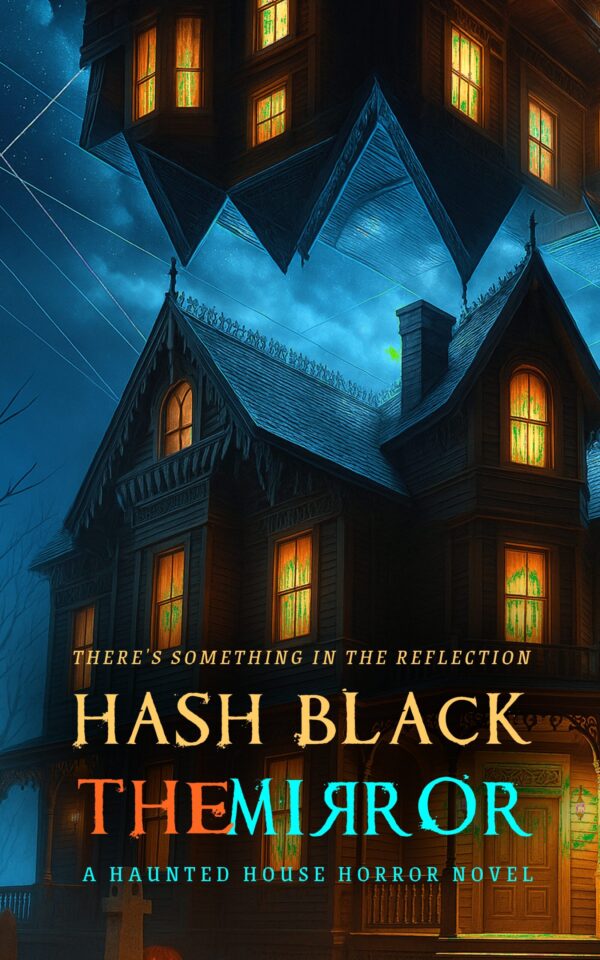
This distortion lies at the heart of The Mirror, where gothic love decay reshapes perception itself. Intimacy alters how the protagonist understands their own needs. The self becomes negotiable.
The mirror does not accuse.
It confirms change.
And confirmation feels more devastating than confrontation.
When Love Begins to Watch
One of the most unsettling moments in gothic emotional decay occurs when love stops connecting and starts observing.
Concern transforms into monitoring. Silence becomes data. Small deviations feel suspicious. What once felt attentive begins to feel invasive.
This surveillance does not announce itself as harm. Instead, it disguises itself as care. Over time, the watched partner adapts unconsciously, choosing safety over honesty.
Gothic horror recognises this transition as especially corrosive because it occurs without force. Consent erodes gradually. Autonomy fades quietly.
In gothic love decay, love does not strike.
It watches.
Inherited Patterns of Emotional Ruin
Gothic horror often frames emotional decay as cyclical.
Relationships repeat earlier failures. Characters inherit emotional scripts they did not consciously choose. Behaviour feels predetermined rather than accidental.
Because of this, gothic love decay rarely feels like a personal flaw. It feels inevitable. The characters recognise patterns too late to escape them.
Readers resonate with this theme because many recognise inherited behaviours in their own lives. Gothic horror does not moralise this recognition. It observes consequence.
The Difference Between Passion and Obsession
Gothic horror takes care not to collapse emotional states too quickly.
Here, love still feels mutual—if strained. Attachment remains present. Doubt grows quietly. Fixation has not yet taken full form.
This balance matters. If obsession emerged too early, the reader would recoil. Gothic horror allows gothic love decay to deepen gradually, ensuring recognition precedes rejection.
The reader stays because they understand why the character stays.
Silence Inside Intimacy
Silence within relationships carries a different weight than silence in isolation.
Here, silence signals avoidance rather than absence. Conversations remain unspoken not because no one listens, but because speaking risks collapse.
Words feel dangerous.
Honesty feels destructive.
Gothic emotional decay thrives in this quiet. It stretches the space between speech. It allows resentment to solidify.
Silence becomes the mechanism through which gothic love decay progresses unnoticed.
Why Emotional Decay Resonates So Deeply
This form of gothic horror resonates because it does not invent fear.
It names it.
Many readers recognise relationships that no longer nourish yet continue to demand loyalty. Gothic horror validates this recognition without prescribing escape.
It does not instruct characters to leave.
It explains why leaving feels impossible.
This explanation builds trust. Once trust forms, the reader remains open to deeper descent.
Where This Path Leads
Emotional decay rarely stabilises.
Left unchecked, gothic love decay transforms into fixation. Attachment tightens. Identity begins to revolve around preservation rather than growth.
This shift unfolds further in Gothic Obsession or hardens into aesthetic resignation in Beauty of Ruin.
For now, the reader remains in recognition.
They do not feel trapped yet.
They feel understood.
The Corridor Narrows
By the end of this descent, something irreversible has occurred.
The reader no longer trusts intimacy to protect identity.
They no longer believe love guarantees safety.
They understand that affection can corrode quietly.
This knowledge does not repel them.
It draws them deeper.
Because gothic horror does not punish recognition.
It rewards it—with continuation.