The most frightening prisons in gothic horror are not secured by locks.
They are secured by relief.
Relief that the walls are familiar. Relief that the door remains closed. Relief that whatever waits outside feels worse than whatever lingers within. This is the core of gothic prison horror—the moment when escape becomes imaginable, but undesirable.
The house does not threaten.
It convinces.
And once staying feels safer than leaving, the prison no longer needs force.
When Shelter Becomes Containment
Gothic horror often begins with refuge.
A home promises protection from weather, from danger, from the world beyond its threshold. Yet over time, that protection thickens. The house becomes quieter. The outside becomes distant. Movement slows.
In gothic prison horror, containment emerges gradually. Doors remain unlocked. Windows remain intact. Yet something subtle shifts: the character stops planning departure.
Leaving feels disruptive.
Staying feels responsible.
That emotional recalibration is where the prison forms.
The Comfort of Known Walls
What makes the gothic prison so effective is familiarity.
The house knows the character’s habits. It accommodates routines. It offers predictability. In contrast, the outside world feels uncertain, loud, demanding.
This contrast creates a dangerous equation:
- Inside = safety
- Outside = risk
Once this logic settles, enclosure feels earned rather than imposed. The character does not feel trapped. They feel protected.
Gothic prison horror thrives on this inversion. The reader recognises that the house is closing in, but the character experiences the closure as care.
When Leaving Feels Like Loss
Unlike sudden captivity, gothic prisons persuade.
The character imagines departure and feels grief rather than hope. The house has absorbed memory—conversations, grief, rituals, routines. Leaving would mean abandoning parts of the self shaped within those walls.
This emotional tether mirrors the narrowing intimacy explored in Gothic Obsession, where enclosure feels intimate rather than violent. In both cases, confinement is justified emotionally before it becomes physical.
The prison does not erase desire.
It redirects it inward.
The House That Watches You Stay
Gothic houses rarely block exits.
They watch exits go unused.
The front door becomes symbolic rather than functional. It exists to reassure rather than invite. Over time, its presence confirms choice: you could leave, but you don’t.
That illusion of agency is essential. As long as the character believes staying is voluntary, the prison remains invisible.
Only later does the realisation surface: the house never needed locks. It needed patience.
Living Inside the Diary
This quiet entrapment is central to The Diary of Cabin 313.
The cabin does not seize its occupant. It records them. The diary becomes evidence not of imprisonment, but of adaptation. The character does not document escape attempts. They document routines.
Time passes without resistance. The house remains unchanged. The outside fades into abstraction.
In gothic prison horror, documentation replaces movement. Writing becomes the only proof that time still exists.
And even that proof stays inside the walls.
When Escape Feels Dangerous
Eventually, the thought of leaving triggers anxiety.
The character imagines the outside as hostile, unfamiliar, or morally suspect. The house reframes itself as the lesser danger. Whatever secrets it holds feel manageable compared to the uncertainty beyond its boundary.
This fear reversal is crucial. The house does not need to trap the character physically. It only needs to make freedom feel unsafe.
Once that happens, the prison stabilises.
Becoming Accustomed to Containment
Over time, enclosure becomes routine.
Rooms shrink psychologically. Paths narrow. The house becomes a complete world. The character stops measuring time externally and begins measuring it internally—by habit, repetition, and memory.
This transition points directly toward the final dissolution explored in Becoming the House, where identity merges with environment. The prison no longer contains the self.
It defines it.
Why the Gothic Prison Endures
Readers recognise gothic prison horror because it mirrors real compromise.
People remain in places that no longer serve them because leaving feels destabilising. They accept narrowing circumstances because familiarity feels safer than change. Gothic horror intensifies this logic until its consequences become undeniable.
The house does not trap the character overnight.
It outlasts their resistance.
And by the time the character understands what has happened, the idea of leaving feels like stepping into void.
The Door That Still Exists
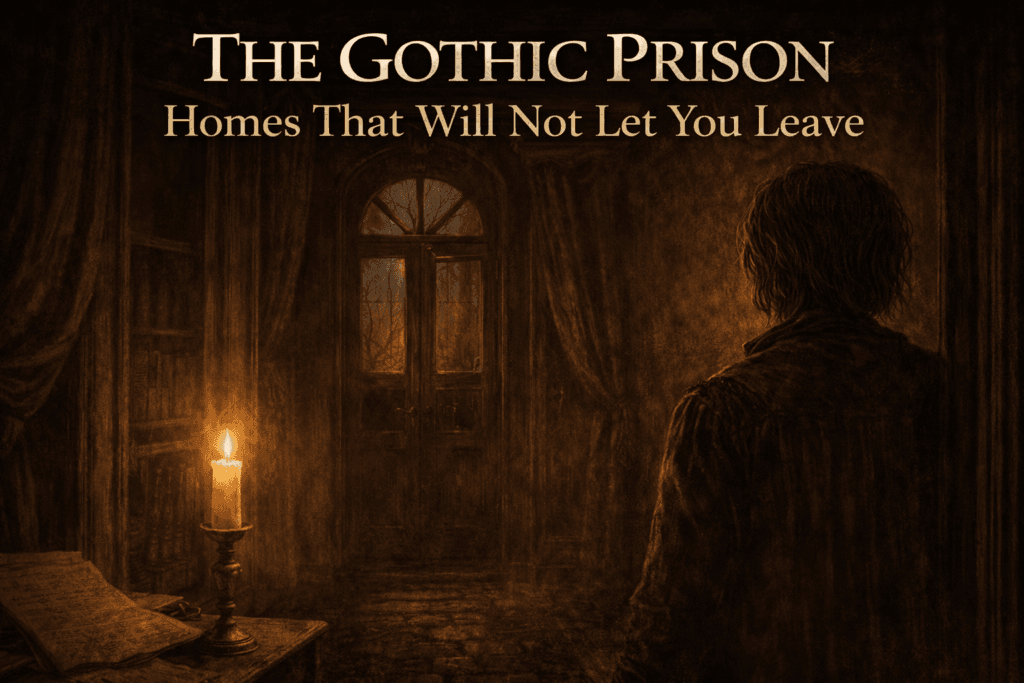
One of the cruelest details of gothic prison horror is that the exit remains visible.
The door is there.
The windows remain intact.
The world beyond continues.
Yet none of that matters.
The house has already succeeded—not by force, but by persuasion. It has made itself necessary.
And necessity is the strongest lock of all.
Where the Prison Tightens
At this stage in the gothic corridor, the reader senses finality.
The house will not release its occupant because the occupant no longer seeks release. The prison has completed its work.
Staying feels safer than leaving.
Routine feels safer than change.
Containment feels safer than freedom.
That is the final truth of gothic prison horror: the most enduring captivity is the one the prisoner protects.