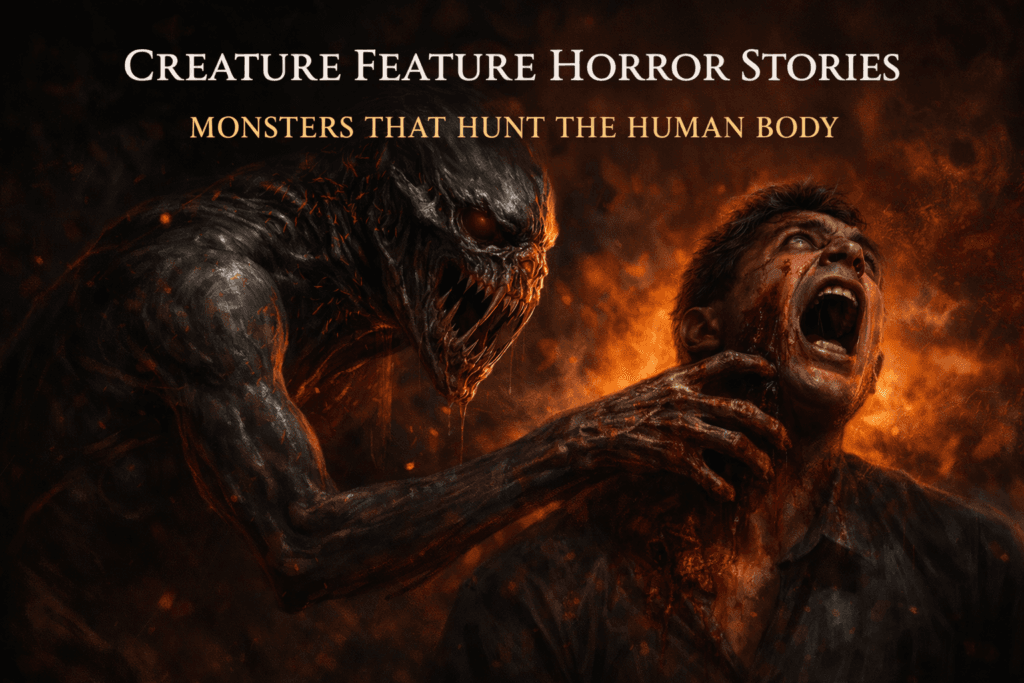
The first instinct is always the same. You look for a way to stop it. A weapon. A weakness. A rule you can exploit.
However, unkillable creature horror exists to destroy that instinct.
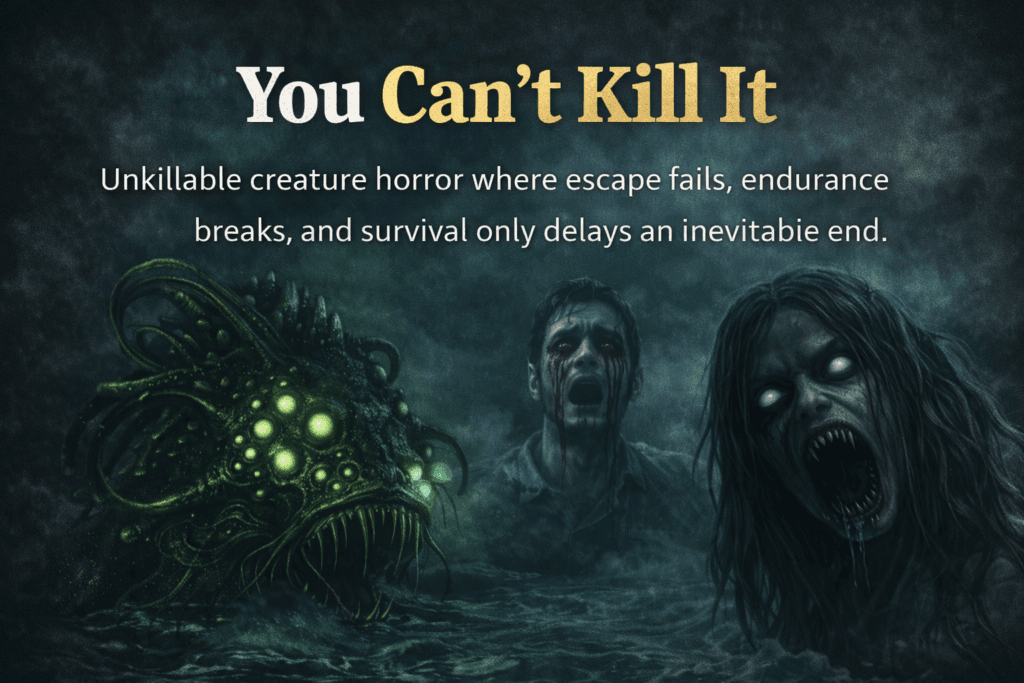
In these stories, the threat does not retreat. It does not weaken. It does not learn restraint. It simply persists. Therefore, survival becomes temporary by definition.
You are not fighting to win.
You are fighting to last.
Why Unkillable Creature Horror Feels Hopeless
Most horror offers a solution, even if it is brutal. Kill the monster. Escape the location. Break the curse.
Unkillable creature horror removes all three.
The creature does not obey mortality. It cannot be reasoned with. It does not respond to damage the way the body does. Consequently, every act of resistance drains the human without affecting the threat.
This is why unkillable creature horror occupies the most despair-driven edge of Creature Feature Horror Stories. Here, effort does not accumulate toward victory. It accumulates toward exhaustion.
The First Realisation: Nothing You Do Matters
The earliest sign that the creature cannot be killed is subtle.
You hurt it.
You escape it.
You survive an encounter.
Yet nothing changes.
The creature returns unchanged. It adapts without damage. Time passes, but the threat remains intact. At this point, hope fractures. You realise that action no longer produces progress.
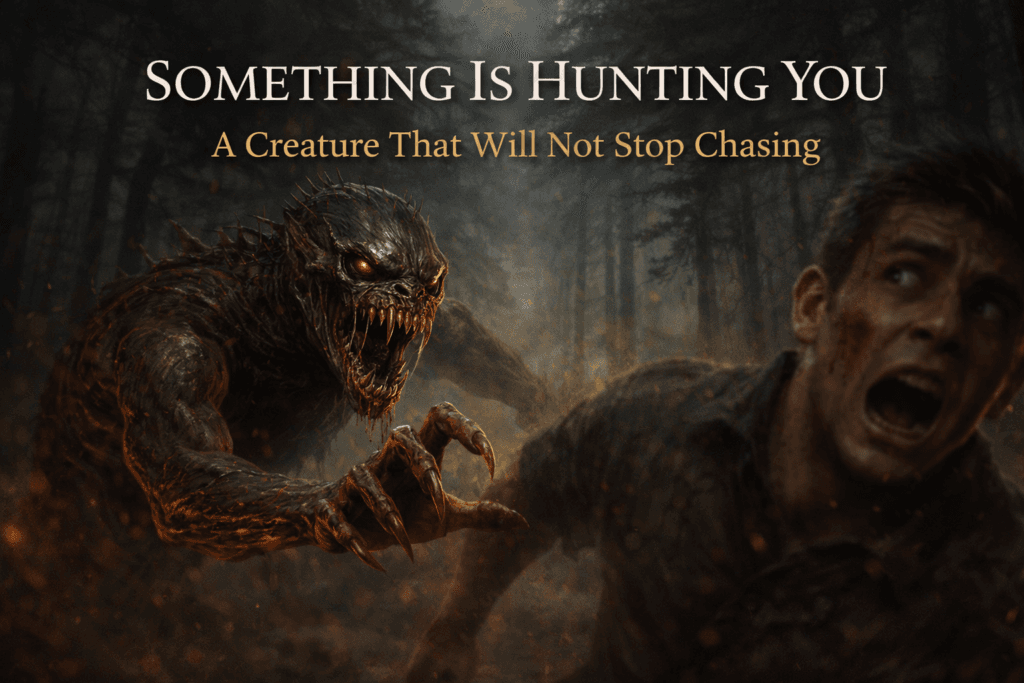
This is the moment readers recognise that what began like Something Is Hunting You was never a chase at all, but a delay tactic disguising inevitability.
You are not moving toward safety.
You are moving between encounters.
Endurance Replaces Strategy
Once finality is removed, strategy collapses.
You stop planning how to defeat the creature. You start planning how to endure it.
Where can you hide?
How long can you rest?
How much can you lose and still function?
In unkillable creature horror, the human recalibrates toward damage management. Injury becomes acceptable. Fear becomes routine. Pain becomes expected.
This shift is where despair takes root.
When the Creature Does Not Need to Be Seen
Some unkillable creatures do not pursue physically. They apply pressure psychologically, perceptually, or spiritually.
In LOOK AT ME, the entity does not require proximity to dominate. It watches. It persists. It erodes the protagonist’s ability to exist privately.
The horror is not attack.
It is presence without escape.
The spirit endures regardless of location, resistance, or understanding. The protagonist’s final act does not defeat the creature.
It removes the only remaining human variable.
Why Suicide-as-Escape Confirms Unkillability
In creature-feature logic, the ultimate test of unkillability is simple:
If the only way to end the threat is to end yourself, the creature has already won.
This is not metaphor. It is mechanics.
The creature persists.
The human does not.
That outcome defines hopeless survival more clearly than any physical battle ever could.
When Death Does Not Resolve the Threat
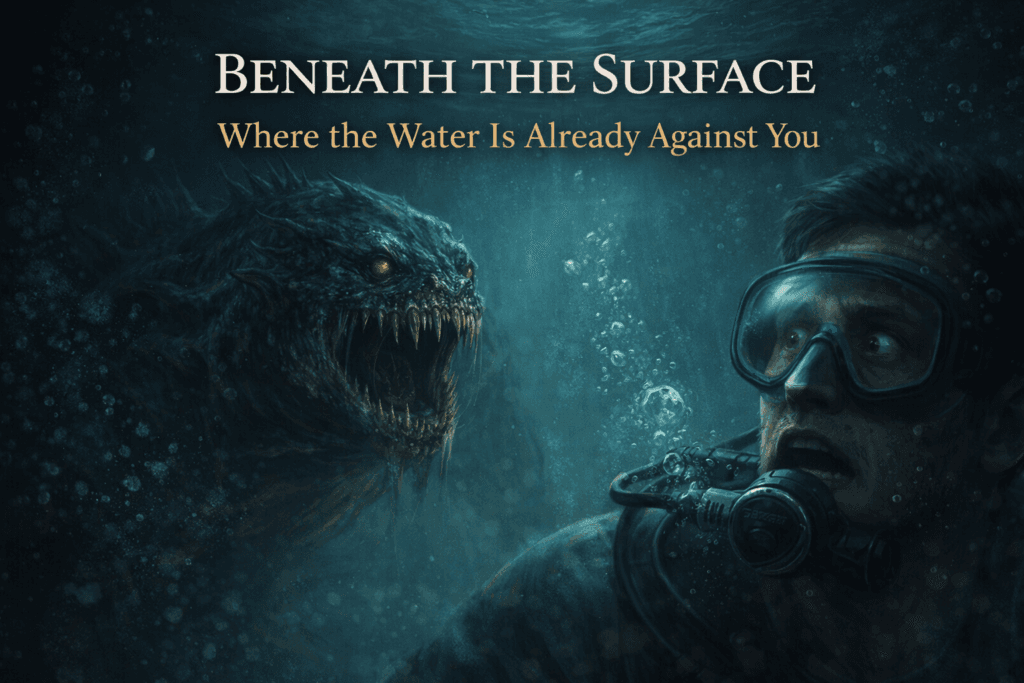
In Dark Waters, the siren manipulates perception, fractures trust, and consumes the protagonist after reality has already collapsed.
The creature is not harmed by the shipwreck.
It is not diminished by human death.
It is not altered by consequence.
The environment resets.
The creature does not.
This is unkillable creature horror at its purest: the story ends, but the threat remains intact.
Why Killing Fails as a Concept
Unkillable creatures reject the idea of finality.
They survive environmental collapse.
They persist across victims.
They endure beyond narrative resolution.
They do not require explanation because explanation does nothing to stop them.
Once this is understood, the human stops asking how to kill it and starts asking how long can I last.
Survival Becomes a Countdown
Without victory, survival transforms into a clock.
You measure time between encounters.
You ration energy.
You trade safety for rest.
In unkillable creature horror, survival is not hopeful. It is provisional.
Each reprieve carries the weight of its expiration.
When Persistence Multiplies
The most devastating realisation is not that the creature endures.
It is that endurance does not require singularity.
Worse still, the logic mirrors the terror of It Was Never Alone, where the understanding that persistence does not require isolation, only repetition.
One threat is unbearable. Many make survival meaningless.
Why Fighting Back Accelerates Collapse
Resistance costs more than it returns.
Every confrontation drains physical strength.
Every escape deepens fear.
Every failed attempt confirms futility.
Eventually, the body learns the truth the mind resists: endurance is finite.
The creature knows this from the beginning.
When the Creature Outlives the Story
The most devastating aspect of unkillable creature horror is not the ending.
It is the implication.
The creature existed before the protagonist.
It exists after the final page.
It will exist after the next victim.
Survival does not close the loop.
It only delays participation.
Why Hopeless Survival Converts Readers
Readers drawn to unkillable creature horror are not seeking catharsis. They are seeking recognition.
They want stories where effort fails. Where courage does not matter. Where the universe refuses fairness.
Books like Dark Waters and LOOK AT ME convert because they do not offer false victory.
They respect inevitability.
They understand that some threats do not need to win.
They only need to last longer than you.
Final Truth of the Unkillable
Unkillable creature horror delivers a truth most stories avoid:
You do not survive by winning.
You survive by delaying.
And delay always ends.
The creature does not fear time.
The creature does not fear death.
Only you do.
And it knows that.