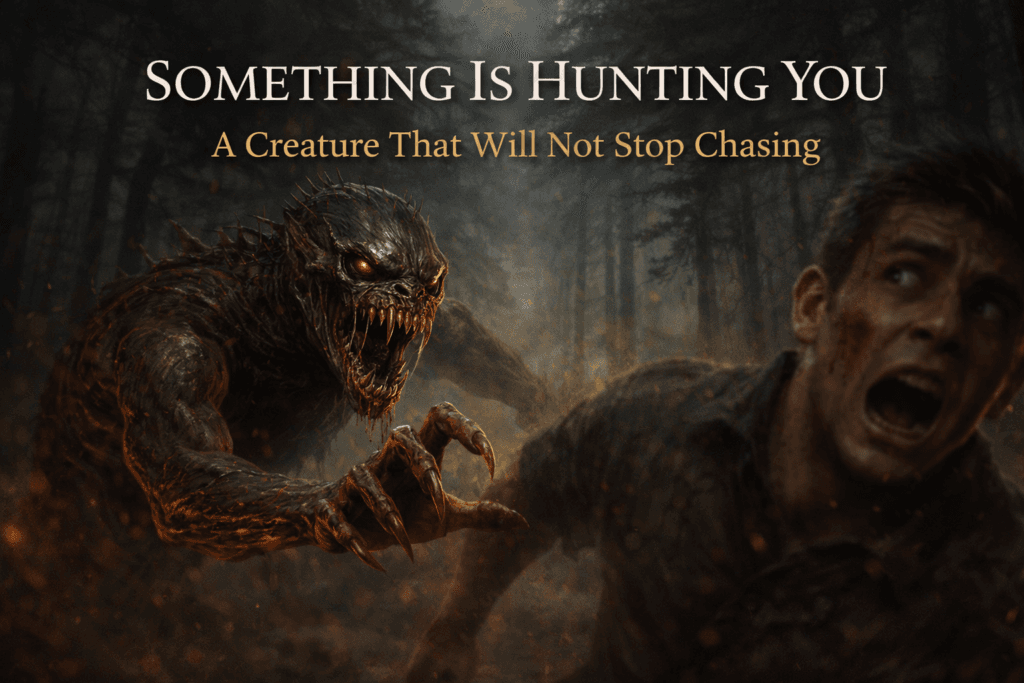
You do not need proof to know you are being hunted. Your body already understands. Your breathing shortens. Your muscles tighten. Your senses sharpen, yet nothing appears where you expect it to be. That delay is not relief. Instead, it is confirmation.
In creature hunting horror, the moment of awareness always arrives too late. By the time you recognise pursuit, the distance has already closed. Therefore, the question is no longer what is out there. The question becomes how long your body lasts once it commits to the chase.
Because survival terror operates at speed, creature hunting horror does not linger on mystery. It escalates immediately. Something has noticed you. Something has selected you. And although you may still be standing still, the hunt has already begun.
You are prey.
Why Creature Hunting Horror Hits Faster Than Other Fear
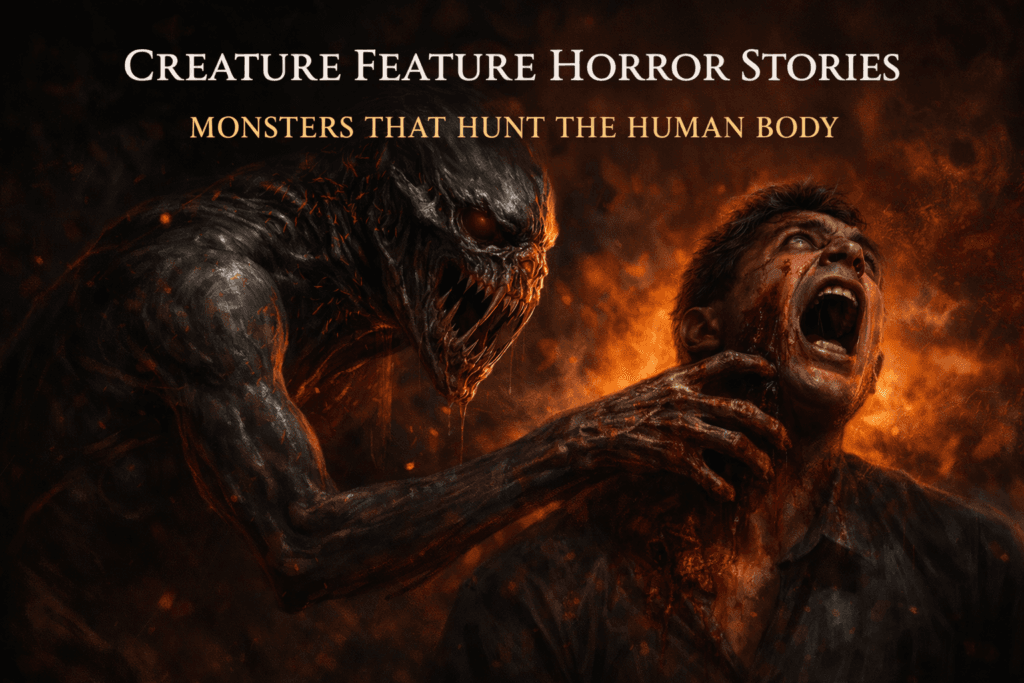
Creature hunting horror belongs to a broader lineage of Creature Feature Horror Stories that strip fear down to pursuit, exposure, and bodily failure rather than mystery or symbolism.
It works because it removes deliberation. Unlike slower horror forms, it does not wait for belief. Instead, it activates instinct. As a result, fear bypasses the intellect and settles directly into the body.
Once the hunt begins, your options narrow rapidly. You run, but terrain resists you. You hide, but sound betrays you. You fight, yet exhaustion accumulates faster than damage. Consequently, every decision accelerates collapse rather than escape.
This is why creature hunting horror attracts fast buyers. Readers drawn to this fear are not browsing for mood. They want immediacy. They want pursuit. And most importantly, they want confirmation that survival is never guaranteed once the chase locks in.
The First Rule of the Hunt: Awareness Equals Selection
In creature hunting horror, awareness is not safety. Instead, awareness marks the transition from potential target to confirmed prey.
At first, the body senses irregularity. A sound repeats too consistently. A shadow holds position longer than it should. Footsteps echo when no one follows. However, hesitation delays action, and delay feeds the hunter.
Because predators thrive on pattern recognition, they exploit predictable responses. Panic increases noise. Fear accelerates breathing. Fatigue reduces coordination. Therefore, the body’s own survival mechanisms become liabilities.
The moment you realise something is hunting you is the moment it knows you are worth following.
Why You Cannot Outrun a Creature That Hunts
Running feels like the obvious choice. Yet in creature hunting horror, running rarely succeeds. Speed fades. Terrain interferes. Injury compounds error. Meanwhile, the hunter does not tire in the same way.
Unlike humans, creatures do not sprint blindly. They pace. They corner. They pressure. As a result, distance becomes illusion rather than advantage.
This is where the terror sharpens. You realise that movement is not escape. It is merely delay.
Therefore, the hunt continues until your body gives something up: breath, balance, blood, or consciousness.
When Hiding Makes the Hunt Worse
Hiding promises relief. Silence. Stillness. Control. However, creature hunting horror exposes a brutal truth: hiding only works against threats that rely on sight alone.
Predatory creatures adapt. They listen. They smell. They wait. Consequently, stillness does not stop the hunt. It refines it.
As time passes, muscles cramp. Breath grows shallow. Fear magnifies every sound you make. Meanwhile, the creature does not rush. It allows the body to betray itself.
At that point, hiding transforms into containment.
You are no longer escaping. You are being stored.
Why Fighting Back Rarely Ends the Hunt
Violence feels empowering. It feels final. Yet in creature hunting horror, fighting back often guarantees escalation rather than victory.
Creatures absorb damage differently. They recover faster. They adapt mid-conflict. Meanwhile, the human body deteriorates with every exchange.
Even when injury lands, it rarely stops the pursuit. Instead, it enrages it. As a result, the hunt intensifies rather than concludes.
This is why killing the creature is rarely the point. Survival requires distance, not dominance. And distance rarely lasts.
The Psychological Collapse of Being Hunted
The most devastating aspect of creature hunting horror is not physical injury. It is erosion.
Sleep disappears first. Then judgment. Then precision. The body remains upright, yet decision-making fractures. Fear creates tunnel vision. Memory shortens. Logic dissolves.
Because the hunt never fully stops, the body never recovers. Even pauses feel temporary. Silence becomes suspicious. Safety feels false.
At this stage, exhaustion replaces panic. And exhaustion makes mistakes inevitable.
Childhood and the Hunt: When Innocence Becomes Access
Creature hunting horror becomes especially vicious when it intersects with childhood. Smaller bodies. Slower reactions. Limited understanding.
In these scenarios, pursuit often hides behind ritual. Routine. Trust. Bedtime. Teeth falling out. Darkness after lights go off.
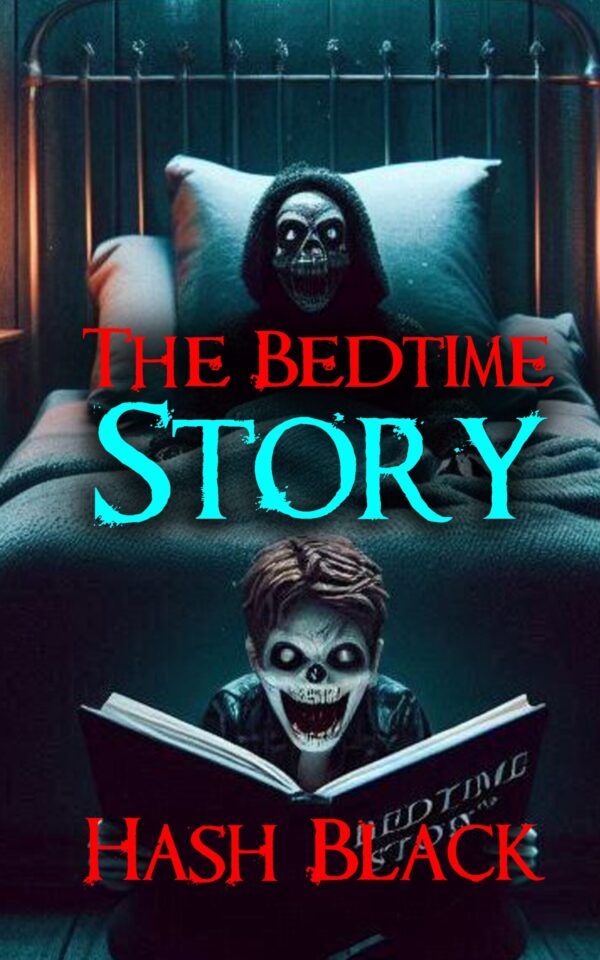
The Tooth Collector weaponises this vulnerability perfectly. The hunt does not announce itself. Instead, it embeds itself inside something familiar, something comforting. Consequently, awareness arrives only after access is granted.
Once the child becomes the target, escape options collapse instantly. The hunt does not chase. It waits.
Darkness as a Hunting Multiplier
Darkness does not simply conceal predators. It dismantles the body’s primary defence: sight.
Once vision fails, movement slows. Balance wavers. Confidence erodes. Meanwhile, the creature navigates effortlessly.
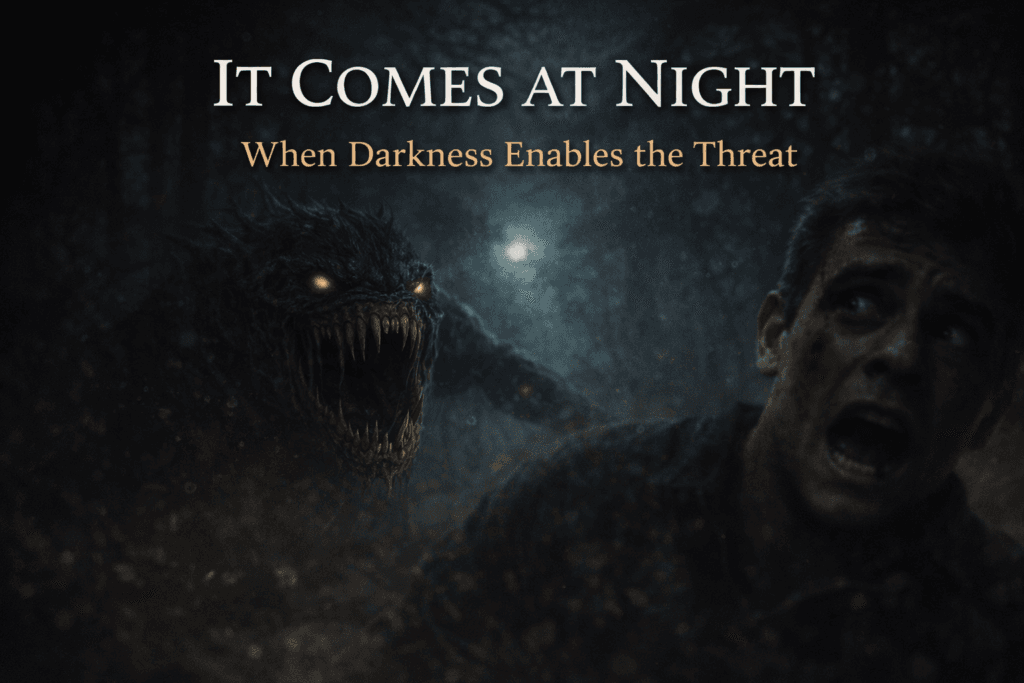
They Only Visit When it’s Dark demonstrates how darkness transforms pursuit into inevitability. The hunt does not begin at sunset. It completes itself there.
Because darkness removes distance, the creature does not need speed. It needs patience.
When the Hunt Moves Below the Surface
Some hunts do not occur on land at all. Instead, they unfold beneath surfaces that promise safety: water, floors, basements, depths.
In these scenarios, the body is already compromised before pursuit begins. Breath is limited. Movement resists force. Panic accelerates failure.
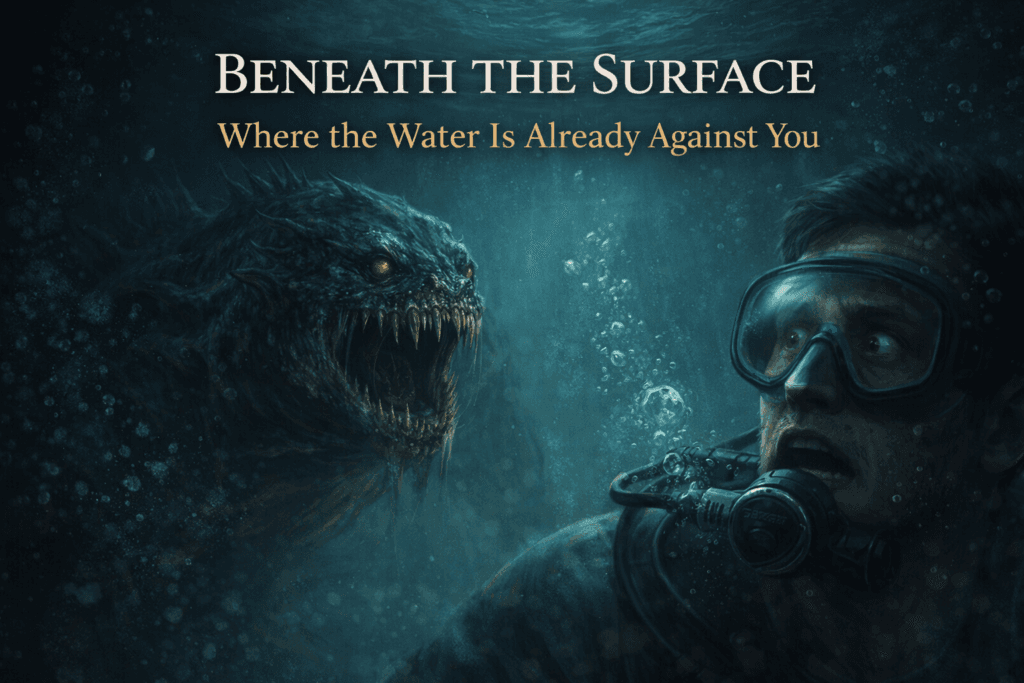
These dynamics connect directly to Beneath the Surface, where escape routes disappear vertically rather than horizontally. Once submerged, the hunt does not need aggression. Physics does the work.
Why You Cannot Kill What Hunts You
In certain forms of creature hunting horror, the creature does not obey finality. Injury slows it. Damage redirects it. Death does not stop it.
This transforms the hunt entirely. Resistance no longer promises conclusion. Instead, it promises repetition.
This logic aligns with You Can’t Kill It, where pursuit survives destruction. Once the creature proves unkillable, hope collapses. Survival becomes temporary by definition.
At that point, the body does not flee toward safety. It flees toward postponement.
The Body as Evidence of the Hunt
Even when escape occurs, the body does not reset. Injury lingers. Pain reshapes movement. Fear rewires reflexes.
Creature hunting horror insists on consequence. The hunt leaves marks. Scars. Missing pieces. Memories the body refuses to forget.
Because of this, survival feels incomplete. You live, but not intact. You move forward, but something follows you internally.
The hunt never truly ends. It migrates.
Why Fast Buyers Gravitate to Creature Hunting Horror
Readers who seek creature hunting horror do so because they want immediacy. They want pressure. They want no safe distance between themselves and the threat.
These readers recognise the difference between danger and pursuit. Danger can be avoided. Pursuit adapts.
Books like The Tooth Collector and They Only Visit When it’s Dark convert because they remove hesitation. They present the hunt clearly, escalate relentlessly, and refuse false resolution.
Fast buyers respond to inevitability.
Final Truth of the Hunt
Creature hunting horror strips survival down to its most uncomfortable truth: once something commits to chasing you, your body becomes a resource with an expiration date.
You can run. You can hide. You can fight. Yet every option feeds the same outcome.
Awareness marks you.
Movement exhausts you.
Resistance delays you.
And delay is all the hunt ever needed.