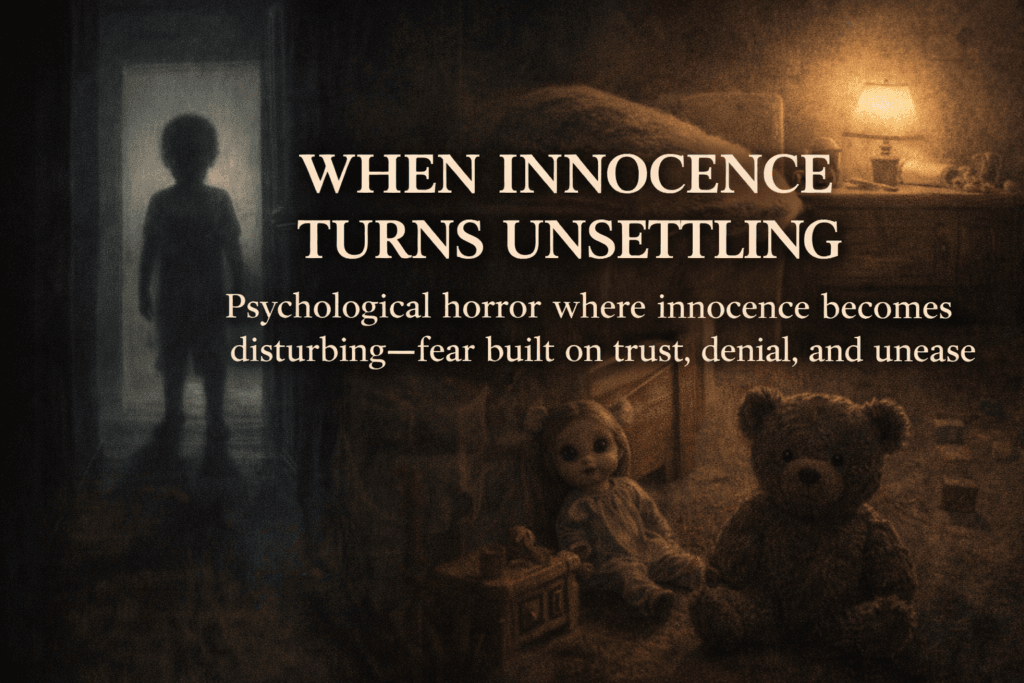
Innocence is supposed to reassure us.
Children, simple objects, playful routines, and gentle voices exist in our minds as symbols of safety. They suggest harmlessness. They promise that nothing truly bad could emerge from them.
Psychological horror knows better.
When innocence turns unsettling, fear doesn’t arrive through threat. Instead, it arrives through contradiction. Something meant to soothe begins to disturb. Something meant to protect begins to harm. As a result, the reader feels betrayed—not attacked.
That betrayal is what makes this strain of psychological horror linger.
Why Innocence Makes the Perfect Mask
On its own, innocence feels neutral. However, when horror hides behind it, the effect intensifies dramatically.
Children aren’t expected to deceive. Toys aren’t expected to threaten. Songs, games, and bedtime rituals aren’t supposed to carry dread. Because of this, the reader’s guard stays down longer than it should.
As a result, the unease grows quietly.
This is why stories like these sit comfortably within psychological horror.
Rather than confronting the reader with danger, they erode the reader’s assumptions first.
Subtlety Over Shock
Unlike overt horror, stories that corrupt innocence rarely escalate quickly. Instead, they rely on patience.
At first, something feels slightly wrong.
Then, it feels repetitive.
Eventually, it feels deliberate.
Because the surface remains gentle, the reader struggles to justify their discomfort. Consequently, fear turns inward. You begin to question your own reaction rather than the story itself.
That internal conflict is exactly the point.
When Familiar Comfort Becomes Suspicious
In many of these stories, the unsettling element never changes.
A child keeps smiling.
A toy stays in the same place.
A song repeats without variation.
However, context shifts. Perspective tightens. Meaning warps.
This slow reframing aligns closely with psychological horror for readers who hate gore. There’s no need for violence when implication does the work more effectively.
Instead of asking what happened, the reader asks why this feels wrong.
Innocence and Power Imbalance
One reason this subgenre feels so disturbing is power.
Innocence suggests vulnerability. Yet, in these stories, the vulnerable often hold influence. A child’s word reshapes reality. A harmless object dictates behavior. A simple request becomes impossible to refuse.
Because the imbalance remains unspoken, resistance feels inappropriate. As a result, characters comply long after they should have fled.
This dynamic creates dread without aggression—and that restraint makes the outcome feel inevitable.
The Thin Line Between Care and Harm
In many cases, innocence doesn’t act alone. It’s protected.
Adults dismiss concerns.
Caretakers excuse behavior.
Observers rationalize what they see.
As a result, warning signs disappear behind reassurance.
This echoes the suffocating familiarity found in when home becomes the enemy. Here, however, the danger doesn’t come from walls or rooms—it comes from belief.
The system meant to protect innocence becomes the thing that enables harm.
Why the Reader Feels Complicit
One of the most uncomfortable aspects of this cluster is participation.
Because the surface remains gentle, readers often continue reading without protest. You tolerate the discomfort. You wait for clarity. You assume explanation will arrive.
However, it rarely does.
That delay creates guilt. By the time you recognise the threat, you realise you accepted it for too long. Consequently, the horror doesn’t just implicate the characters—it implicates you.
A Story Where Innocence Is the Warning
This tension defines The Midnight Giggle.
Nothing in the story announces danger outright. Instead, the unease grows through repetition, tone, and timing. Innocence never disappears—it simply reveals itself as something else.
The horror works because the reader keeps expecting reassurance. When reassurance never comes, dread takes its place.
Innocence as a Tool of Denial
In many psychological horror stories, denial protects characters from reality. Here, innocence serves that role perfectly.
“It’s just a child.”
“It’s just a toy.”
“It doesn’t mean anything.”
Each excuse delays action. Each rationalisation deepens the trap. As a result, fear grows not through escalation, but through stasis.
This refusal to act connects directly with when you can’t trust the narrator, where perception becomes distorted not through madness, but through self-deception.
Why Resolution Feels Uncomfortable
Even when these stories end, innocence often remains intact on the surface.
The child doesn’t change.
The object stays where it is.
The behavior continues.
Instead of relief, the reader feels unresolved tension. The horror wasn’t defeated—it was recognised too late.
That unresolved discomfort feeds directly into horror that lingers, where fear survives because nothing visibly ended.
Who This Kind of Horror Is For
Stories where innocence turns unsettling resonate with readers who:
- Feel disturbed by subtle shifts rather than overt threats
- Distrust reassurance when it feels forced
- Prefer implication over explanation
- Recognise fear hidden inside normality
If you’ve ever felt uneasy without being able to justify why, this cluster speaks directly to you.
Where This Path Leads Next
Once innocence becomes suspect, fear no longer needs disguise.
The next step is endurance.
When nothing resolves—and the unease refuses to fade—horror stops asking for attention and starts demanding patience.
That transition leads naturally into horror that lingers, where fear doesn’t climax—it stays.
If This Made You Uncomfortable
That reaction matters.
Psychological horror that corrupts innocence works precisely because it forces the reader to question their instincts. What should be trusted becomes dangerous. What should be harmless becomes decisive.
The Midnight Giggle was written for readers who understand that the most disturbing things aren’t aggressive—they’re familiar. If this post unsettled you quietly, it did exactly what it was meant to do.