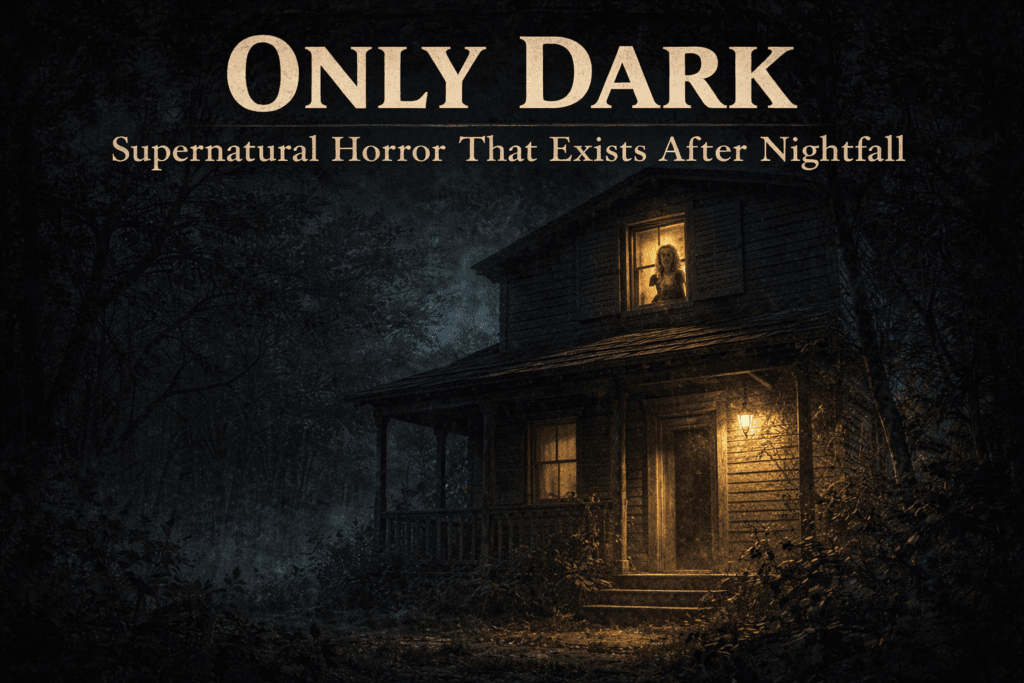
Some horror can happen at any time.
Only dark horror waits.
In supernatural horror, few conditions are as unsettling as time-bound fear. When the haunting exists only after nightfall, safety becomes conditional. Daylight offers reprieve, but never resolution. Darkness does not merely conceal the threat—it enables it. As a result, fear becomes cyclical, predictable, and unavoidable.
This is the domain of nocturnal supernatural horror. Here, terror is not random. It is scheduled. The reader understands that nothing will happen in the light, yet dreads the certainty of what arrives when darkness returns. Fear does not rely on surprise. It relies on inevitability.
For many readers, this structure creates a uniquely oppressive form of dread—one that repeats rather than resolves.
What Defines Nocturnal Supernatural Horror
Nocturnal supernatural horror is structured around a single condition: time.
The supernatural threat exists only at night. It may weaken at dawn, retreat with sunrise, or simply vanish until darkness returns. Regardless of mechanism, the rule remains consistent. Night is dangerous. Day is temporary relief.
This rule reshapes the entire narrative. Fear does not need to escalate constantly. It only needs to wait. The reader understands that each night renews the threat, even if nothing new occurs.
Because of this, nocturnal supernatural horror often feels ritualistic. Darkness marks the boundary between safety and vulnerability, repetition replaces escalation, and anticipation becomes the primary engine of fear.
Why Time-Based Fear Is So Effective
Fear intensifies when it follows a schedule.
In most horror, unpredictability creates tension. In nocturnal horror, predictability does. The reader knows when the threat will return, but not how it will manifest. That certainty removes hope of escape.
Instead of asking whether something will happen, the reader asks how long they can endure it.
This is why nocturnal supernatural horror often feels heavier than sudden terror. The fear does not spike—it settles. Each sunset becomes a reminder that safety is temporary.
Darkness as a Condition, Not a Setting
In this branch of supernatural horror, darkness is not merely atmospheric.
It is a rule.
The threat does not exist without it. The night does not heighten fear—it activates it. This distinction matters because it removes randomness. Darkness becomes causal rather than cosmetic.
The reader understands that fear will arrive on schedule, regardless of preparation. Daytime planning becomes irrelevant. Night overrides intention.
As a result, nocturnal supernatural horror transforms time itself into an antagonist.
The Psychological Toll of Repeated Nights
Repeated exposure without resolution erodes resistance.
Characters do not experience a single terrifying event. They experience cycles of fear. Each night reopens wounds that never heal. Each dawn offers relief that feels increasingly fragile.
This repetition exhausts rather than shocks. The reader senses the slow collapse of endurance. Fear becomes routine, which makes it harder to escape mentally.
Because of this, nocturnal horror often leaves a deeper psychological imprint than stories driven by escalation alone.
How Nocturnal Horror Intersects With One-Night Fear
Although nocturnal horror is cyclical, it often overlaps with one-night structures.
Many stories focus on a single night as a concentrated version of a longer pattern. The reader experiences the full weight of nocturnal fear compressed into hours.
This overlap connects naturally with supernatural short stories built for one-night reading. Both rely on time-bound endurance rather than extended mythology. The difference lies in implication. One-night stories promise completion. Nocturnal horror promises return.
The reader finishes the story knowing the night will come again.
When Darkness Removes the Possibility of Help
Night isolates.
People sleep. Communication slows. Visibility narrows. Assistance becomes inaccessible. In nocturnal horror, this isolation is not incidental—it is structural.
The character may survive the night, but they do so alone. No one witnesses the fear. No one validates it. When dawn arrives, the threat withdraws, leaving the character unsupported and unheard.
This dynamic aligns directly with supernatural horror where no help ever arrives. In both cases, fear intensifies because intervention is impossible when it matters most.
Darkness ensures isolation without explanation.
Why the Threat Is Often Unseen at Night
Darkness limits perception.
Rather than revealing the supernatural threat, nocturnal horror often obscures it. Sounds replace images. Movement replaces form. Presence replaces certainty.
This reliance on implication aligns closely with horror stories where you never see what’s haunting you. At night, absence becomes more frightening than appearance. The reader’s imagination fills the gaps left by limited visibility.
Because the threat remains unseen, it cannot be measured or dismissed. Darkness protects the mystery.
When Attention Becomes the Nighttime Threat
In many nocturnal supernatural stories, fear emerges not from attack, but from awareness.
The character senses they are noticed only at night. Observation begins after dark and ends at dawn. That attention becomes unbearable precisely because it is conditional and recurring.
This dynamic defines nocturnal supernatural horror where nightfall triggers unwanted attention. The story anchors fear in the certainty that darkness invites scrutiny. Nothing happens during the day. Everything waits until night.
The reader feels watched alongside the character, counting the hours until sunrise.
Why Daylight Never Truly Reassures
Daylight offers relief, not safety.
In nocturnal supernatural horror, morning does not solve anything. It only pauses the threat. The reader understands that night will return, and with it, the same fear.
This temporary safety creates a unique tension. Characters attempt to reclaim normalcy during the day, but dread persists. Preparation feels futile. Sleep becomes difficult. Anticipation replaces rest.
The cycle continues until endurance breaks.
How Nocturnal Horror Avoids Resolution
Resolution would break the cycle.
If the threat could be eliminated, time would lose its power. Nocturnal horror resists this by refusing final answers. The story may end at dawn, but the pattern remains intact.
The reader closes the story knowing exactly when fear will return. That knowledge ensures lingering unease.
Rather than resolving horror, nocturnal supernatural horror normalises it.
The Aftereffect of Night-Bound Fear
Time-based fear lingers differently.
Readers carry nocturnal horror into their own nights. Darkness feels heavier. Silence feels intentional. Routine nighttime sounds invite interpretation.
Because the fear is conditional, it activates repeatedly. Each night becomes a reminder of vulnerability.
This lingering effect explains why nocturnal supernatural horror often feels more personal than other subgenres. The reader experiences darkness daily.
How Only Dark Fits the Larger Genre
Nocturnal supernatural horror occupies a distinct and essential position within the genre.
It intersects with isolation, implication, repetition, and endurance. Rather than escalating, it cycles. Rather than resolving, it persists.
These mechanisms converge most clearly in supernatural horror reader’s guide, where time-based fear is contextualised alongside other core dread structures.
Who Nocturnal Supernatural Horror Is For
This branch of supernatural horror suits readers who:
- respond strongly to time-based vulnerability
- prefer inevitability over surprise
- value atmosphere over spectacle
- experience fear most acutely at night
It does not suit readers seeking closure or finality. Understanding this distinction prevents mismatch and deepens satisfaction.
Final Thought
Nocturnal supernatural horror does not ask what will happen.
It asks when it will happen again.
By binding fear to darkness, it transforms night into a recurring threat rather than a temporary setting. Morning never solves the problem. It only delays it.
For readers who dread the certainty of nightfall more than the shock of sudden terror, nocturnal supernatural horror remains one of the genre’s most punishing forms.