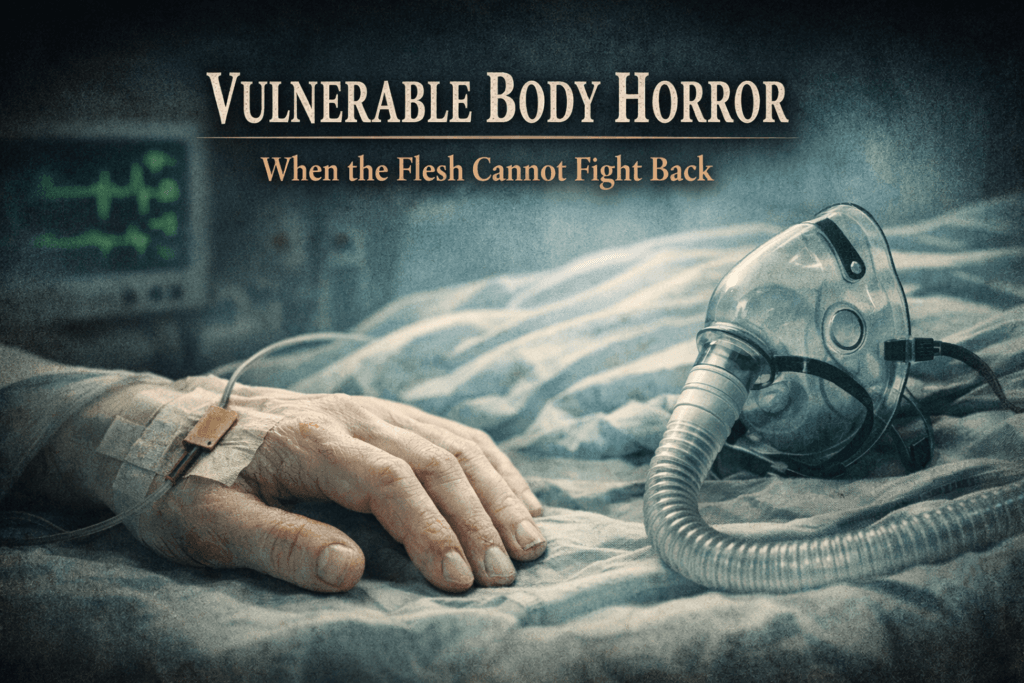
Some horror comes from what the body becomes.
However, the most disturbing horror comes from what the body cannot do.
In the most unsettling disturbing short horror stories, fear does not always arrive through transformation or violence. Instead, it emerges when the body loses its ability to resist. Muscles weaken. Reflexes fail. Skin offers no protection. The flesh remains present, yet it cannot fight back.
Vulnerable body horror centres on this collapse of defence. The terror does not come from an attack alone, but from the realisation that the body no longer has the capacity to respond. Awareness remains. Fear remains. However, resistance disappears.
Readers drawn to disturbing short horror stories of this kind seek intimate dread. They want horror that feels close, unavoidable, and deeply personal.
What Vulnerable Body Horror Really Is
Vulnerable body horror focuses on physical helplessness.
Unlike loss-of-control narratives, the body may still obey commands. Unlike extraction horror, nothing may be taken yet. Instead, the body simply fails to protect itself. Strength drains away. Illness sets in. Injury lingers. The flesh becomes exposed.
Several elements consistently define vulnerable body horror:
- Physical weakness or fragility
- Inability to resist harm
- Heightened awareness of threat
- Dependence on forces that cannot be trusted
Because the body still belongs to the self, the horror feels intimate. The reader experiences fear through proximity rather than spectacle.
Why Vulnerability Is More Disturbing Than Violence
Violence implies action. Vulnerability implies inevitability.
In disturbing short horror stories, vulnerability terrifies because it removes the illusion of safety. The body no longer functions as a barrier. Instead, it becomes a liability.
Moreover, vulnerability forces endurance. The character cannot fight, flee, or overpower what threatens them. They must remain present while harm approaches. As a result, dread stretches across every moment.
This sustained exposure creates horror that lingers long after the story ends.
When the Body Fails Before the Mind
One of the most unsettling aspects of vulnerable body horror is the mismatch between awareness and ability.
The mind recognises danger. Instinct urges action. Yet the body refuses to comply. Limbs do not respond. Breath shortens. Pain immobilises rather than motivates.
This dynamic places vulnerable body horror in direct conversation with Loss of Bodily Autonomy. In both cases, the self remains conscious while the body becomes unreliable. However, vulnerability removes control through weakness rather than override.
The result is the same: the body cannot be trusted.
Exposure as the Central Fear
Vulnerability creates exposure.
The skin feels thin. Bones feel fragile. Organs feel unprotected. In disturbing short horror stories, this exposure transforms the environment into a threat. Ordinary spaces become hostile because the body cannot withstand them.
Moreover, exposure attracts exploitation. When others recognise weakness, danger escalates. Predators sense opportunity. Systems fail to intervene.
Vulnerable body horror thrives on this recognition: the world does not pause for weakness.
From Vulnerability to Exploitation
Once the body becomes vulnerable, exploitation follows naturally.
Characters may not lose control immediately. However, their weakness invites interference. Assistance turns conditional. Protection becomes transactional. Eventually, the body exists at the mercy of others.
This progression aligns vulnerable body horror closely with Extraction & Harvesting. In both cases, the body becomes something that can be used. Vulnerability is the gateway that allows removal, manipulation, or consumption to occur.
The horror deepens because vulnerability feels unavoidable rather than malicious.
Dependence and the Loss of Safety
Vulnerability often introduces dependence.
Characters rely on caretakers, systems, or strangers. However, dependence erodes safety rather than restoring it. Trust becomes a risk. Help arrives with conditions.
In disturbing short horror stories, dependence magnifies fear because it forces surrender without guarantee. The body cannot defend itself, yet it must submit to external authority.
This imbalance creates tension that never fully resolves.
The Body as a Site of Anticipation
Vulnerable body horror often unfolds through anticipation rather than action.
Pain threatens. Illness progresses. Weakness deepens. However, the story delays impact. The reader inhabits the waiting space where harm feels inevitable but has not yet occurred.
This waiting amplifies dread. Every moment feels borrowed. Every breath feels temporary.
Short-form horror excels here because it can end before resolution, leaving vulnerability unresolved.
Why Short Horror Stories Excel at Vulnerability
Vulnerable body horror works especially well in short fiction.
Short narratives strip away distraction. They focus entirely on physical fragility and emotional proximity. As a result, the reader experiences vulnerability without relief.
Many disturbing short horror stories end while the character remains exposed. There is no recovery arc. There is no empowerment. The body stays weak. The threat stays close.
This refusal to resolve vulnerability leaves a lasting impression.
Vulnerable Body Horror Within Body Horror Stories
Vulnerable body narratives occupy a crucial position within Body Horror Stories.
They represent the point where fear becomes unavoidable. The body does not transform into something monstrous. Instead, it loses its ability to protect the self.
For readers who prefer intimate dread over spectacle, vulnerable body horror offers sustained unease grounded in physical reality.
Featured Disturbing Short Horror Read: The Bedtime Story
Few disturbing short horror stories capture vulnerability as precisely as The Bedtime Story.
In this story, the terror does not rely on violence or transformation. Instead, it unfolds through enforced helplessness. The body remains present. Awareness remains sharp. However, the flesh cannot fight back.
The horror emerges quietly, making each moment feel inevitable. The story traps the reader inside vulnerability without offering escape.
This makes The Bedtime Story an ideal companion for readers drawn to intimate, vulnerability-driven horror.
Why Vulnerable Body Horror Endures
Vulnerable body horror endures because it reflects a fear that feels deeply human:
the fear that the body will fail when it is needed most.
No monster is required. No ritual is necessary. The flesh simply gives out.
For readers seeking disturbing short horror stories rooted in fragility, exposure, and helplessness, vulnerable body horror remains one of the genre’s most unsettling expressions.