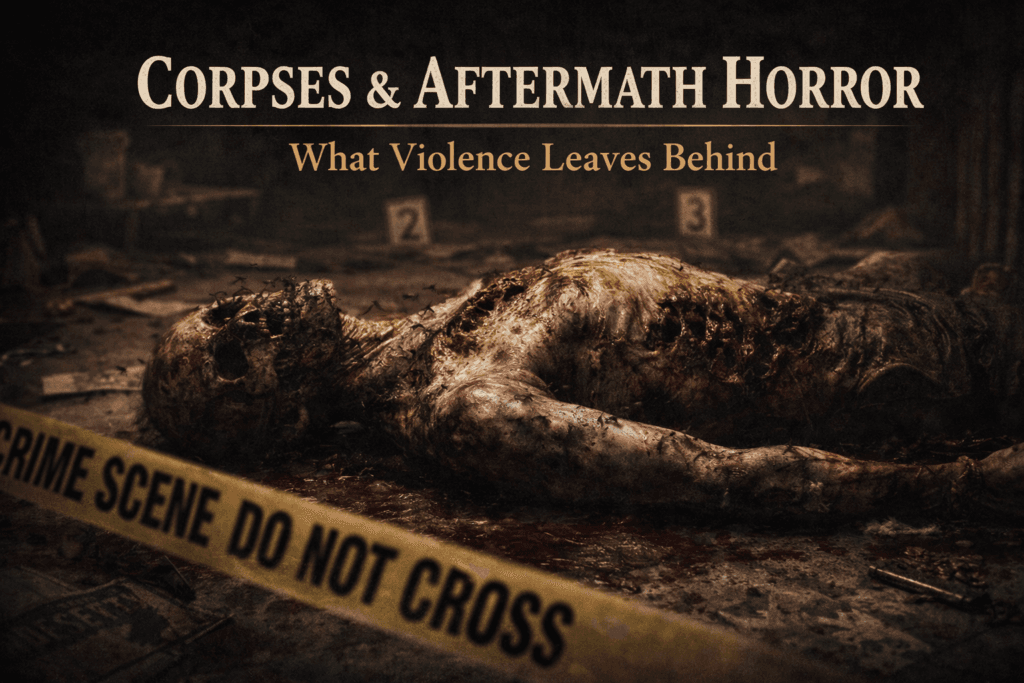
Violence does not end when the body stops moving.
Instead, it lingers.
In the most unsettling graphic horror stories, terror does not conclude with the final act. It continues in what remains. Corpses persist as evidence. Bloodstains refuse to fade. The body, even in death, keeps telling the story of what happened to it.
Corpses and aftermath horror focuses on this persistence. The violence has already occurred. The question is no longer what will happen, but what cannot be undone. For readers drawn to forensic dread, this sub-genre delivers horror through residue rather than action.
What Corpses & Aftermath Horror Really Explores
Corpses and aftermath horror examines the consequences of violence.
Unlike vulnerability or punishment narratives, the damage here is complete. The body has already been broken. What remains is the evidence—physical, psychological, and environmental.
Key elements define this cluster in graphic horror stories:
- The body as proof, not participant
- Violence implied through remains
- Environments altered by death
- Horror that unfolds through investigation and discovery
Because the act itself has passed, the fear shifts toward interpretation. Every mark becomes a clue. Every absence becomes meaningful.
Why Aftermath Is Often More Disturbing Than the Act
Action shocks. Aftermath unsettles.
In graphic horror stories, the act of violence can be brief. However, the aftermath forces the reader to confront permanence. Death cannot be reversed. Damage cannot be reasoned away. The body stays.
Moreover, aftermath horror removes adrenaline. Without motion, the reader cannot hide behind chaos. Instead, they must sit with the evidence. Silence replaces screams. Stillness replaces struggle.
As a result, dread becomes contemplative rather than reactive.
The Corpse as Narrative Center
In corpses and aftermath horror, the body becomes the story.
Position matters. Condition matters. What is missing matters. The corpse functions as a record of decisions already made. Someone acted. The body absorbed the result.
This forensic framing appeals to readers who want graphic horror stories that invite inspection. The fear comes from reconstruction rather than surprise.
Each detail pushes the reader closer to understanding what occurred—and why it should never have happened.
When Violence Refuses to Stay Contained
Aftermath horror often spreads outward.
Bodies contaminate spaces. Fluids seep into floors. Odors linger. Objects become tainted. As a result, the environment itself begins to decay.
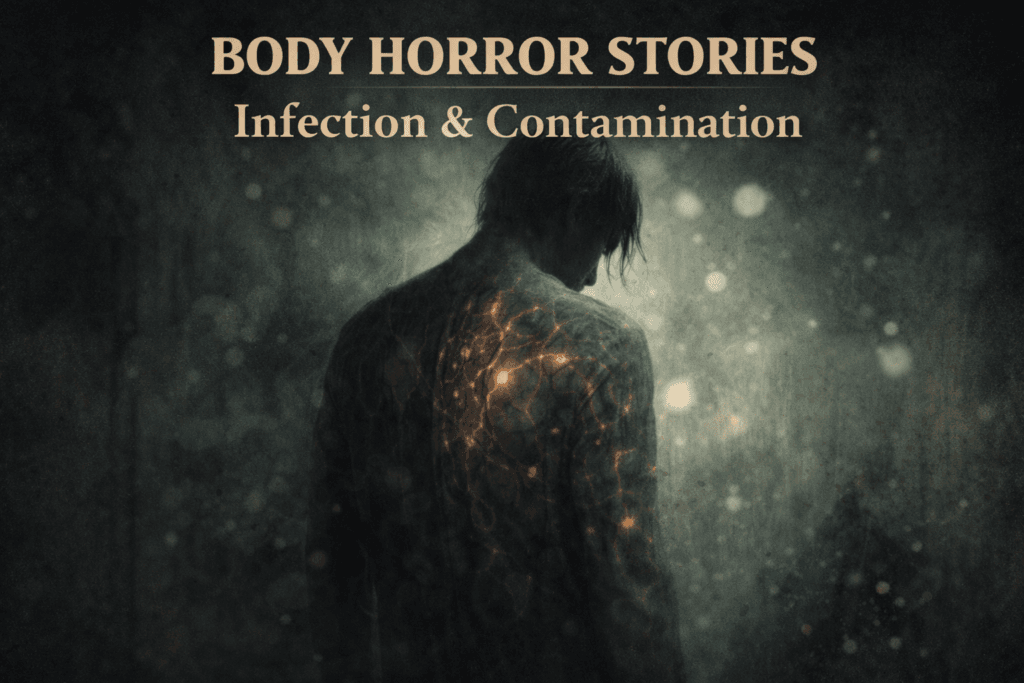
This is why corpses and aftermath narratives naturally intersect with Infection & Contamination. Violence does not stay local. It spreads. It infects surroundings, memories, and people.
In graphic horror stories, this spread suggests that violence cannot be isolated. Once it occurs, it reshapes everything around it.
The Body That Still Acts After Death
Even in stillness, the body continues to exert influence.
Decay progresses. Insects arrive. Disease threatens. Evidence shifts. Consequently, the corpse becomes active without intention. The body betrays expectations of finality.
This dynamic links aftermath horror closely with Body Betrayal, where the body continues to act against human desire. Even after death, the flesh refuses cooperation.
For readers, this betrayal deepens unease. Death does not restore order. It destabilises it further.
Forensic Horror and the Reader’s Role
Corpses and aftermath horror often positions the reader as observer.
Rather than participating in the violence, the reader arrives afterward. They examine scenes. They notice inconsistencies. They infer motive and method.
This forensic role increases engagement. The reader feels complicit—not in the act, but in its interpretation. They reconstruct suffering through evidence.
Graphic horror stories that use this structure reward attention rather than endurance.
Evidence as the True Monster
In aftermath horror, monsters rarely appear.
Instead, evidence terrifies. A stain suggests struggle. A broken object implies resistance. A body part out of place hints at intent.
Because the horror relies on implication, it often feels more realistic. The reader fills gaps with imagination, which intensifies dread.
Moreover, evidence does not argue. It exists. Its silence becomes accusatory.
The Absence of Closure
Corpses and aftermath horror resists resolution.
The violence has ended, yet its meaning remains unresolved. Questions linger. Responsibility may never be assigned. Justice may never arrive.
In graphic horror stories, this lack of closure reinforces realism. The world does not reset after trauma. Bodies do not vanish conveniently.
Instead, the aftermath persists, demanding recognition.
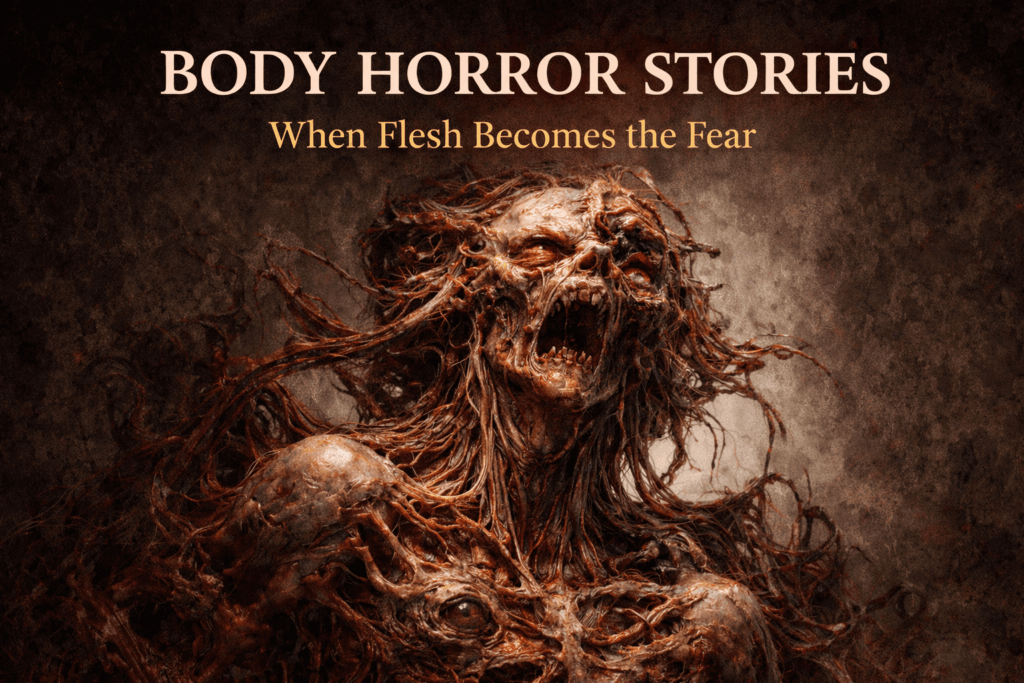
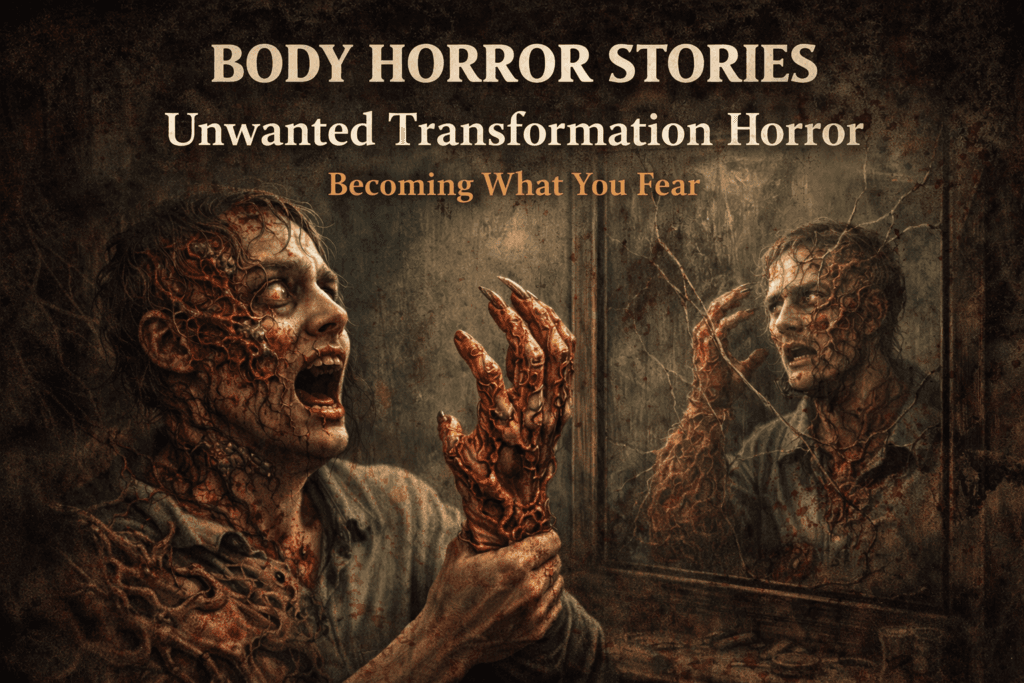
Corpses & Aftermath Within Body Horror Stories
Within body horror stories, corpses and aftermath form the consequence phase.
If vulnerability exposes the body and punishment condemns it, aftermath reveals what remains. The body becomes a warning rather than a threat.
For readers who prefer graphic horror stories rooted in evidence, decay, and permanence, this cluster delivers sustained unease without relying on spectacle.
Featured Graphic Horror Read: The Diary of Cabin 313
Few graphic horror stories explore aftermath as effectively as The Diary of Cabin 313.
Told through records and observations, the story centres on what remains after violence. The body exists as documentation. Each entry adds detail rather than relief.
The horror builds through accumulation. No single moment overwhelms. Instead, the reader becomes trapped in aftermath itself—unable to escape what has already happened.
This makes The Diary of Cabin 313 an ideal fit for readers drawn to forensic, consequence-driven horror.
Why Corpses & Aftermath Horror Endures
Corpses and aftermath horror endures because it confronts a fundamental truth:
violence does not end when the body does.
Evidence remains. Memory lingers. Damage spreads. The corpse becomes a reminder that some acts permanently alter the world.
For readers seeking graphic horror stories that focus on what violence leaves behind, this cluster offers horror that refuses to fade.