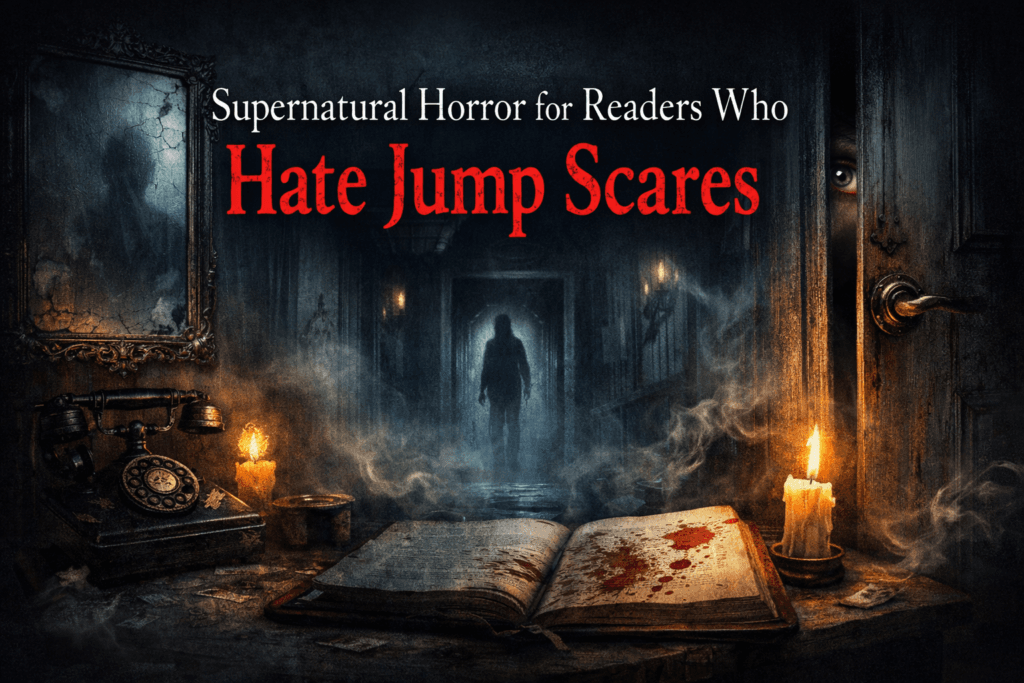
Jump scares exhaust a certain kind of horror reader.
They interrupt atmosphere, break immersion, and replace unease with reflex. While they may startle in the moment, they rarely linger. Consequently, readers who value dread over shock often abandon supernatural horror altogether, convinced the genre no longer serves them.
However, supernatural horror does not require jump scares to be effective. In fact, the genre reaches its most disturbing heights when it avoids them entirely. By relying on atmosphere, implication, and restraint, supernatural horror can create fear that grows quietly and refuses to leave. This guide exists for readers who want that experience — horror that unsettles rather than startles.
Rather than defending jump scares or cataloguing them, this post explains why some readers reject them, how supernatural horror works without them, and where to find stories that respect patience and intelligence.
This Is for Readers Who Feel Jump Scares Ruin Horror
If jump scares make you roll your eyes instead of tightening your chest, you are not alone. Many experienced horror readers share the same reaction, although they often struggle to articulate why.
Jump scares fail these readers because they:
- Replace tension with interruption
- Demand attention instead of earning it
- Break narrative rhythm
- Create fear without consequence
As a result, the scare ends the moment it happens. Nothing follows. Nothing festers.
In contrast, readers who hate jump scares crave continuity of dread. They want fear to build, not reset. They want horror that respects pacing, silence, and uncertainty. Most importantly, they want stories that allow fear to mature instead of detonating it prematurely.
If that describes you, then supernatural horror — done properly — still has much to offer.
Why Jump Scares Clash with Supernatural Horror
At a structural level, jump scares contradict the strengths of supernatural horror.
Supernatural horror depends on:
- Atmosphere
- Anticipation
- Gradual escalation
- Emotional unease
Jump scares, however, depend on surprise. They arrive abruptly, spike adrenaline, and vanish. Therefore, they interrupt the slow-burn processes that supernatural horror relies on.
Moreover, jump scares externalize fear. They tell the reader when to be afraid. Meanwhile, effective supernatural horror invites the reader to decide for themselves — often long before anything overt happens.
For readers who value immersion, jump scares feel intrusive. Instead of deepening fear, they shatter it.
What Supernatural Horror Uses Instead of Jump Scares
When supernatural horror abandons jump scares, it does not lose power. Instead, it redistributes that power across more durable mechanisms.
1. Atmosphere as the Primary Weapon
Atmosphere does not announce itself. It accumulates.
Through setting, tone, and pacing, supernatural horror can generate unease long before the threat becomes clear. The reader senses that something is wrong, although they cannot yet name it. Consequently, tension rises without release.
This atmospheric pressure rewards attentive readers. Every detail matters. Every silence carries weight.
2. Implication Instead of Revelation
Rather than revealing the supernatural threat outright, effective horror suggests its presence indirectly.
Footsteps without a source.
Voices without a body.
Objects that move without explanation.
Because the story refuses to clarify, the reader fills the gaps. As a result, fear becomes personal. The imagination does the worst possible work.
This approach sustains dread far longer than any sudden shock could.
3. Escalation Without Reset
Jump scares reset tension. After the scare, the story must rebuild.
In contrast, supernatural horror without jump scares never resets. Each unsettling moment builds on the last. Each scene adds pressure rather than releasing it. Therefore, fear compounds instead of dissipating.
For readers who hate jump scares, this continuity makes horror feel earned rather than manipulative.
The Kind of Supernatural Horror That Respects Restraint
Not all supernatural horror avoids jump scares. However, the stories that do tend to share key characteristics.
They:
- Prioritize mood over momentum
- Allow scenes to breathe
- Resist overexplanation
- Trust the reader’s patience
These stories understand that fear thrives in uncertainty. Instead of startling the reader, they let dread settle and grow.
This approach often overlaps with unseen supernatural horror, where the threat remains partially concealed throughout the narrative.
Why the Unseen Is More Disturbing Than the Sudden
Jump scares depend on visibility. Something appears, loudly and suddenly.
However, the unseen terrifies because it denies closure. The reader never receives confirmation. They never fully understand the shape, motive, or limit of the threat.
As a result:
- Fear remains unresolved
- The story lingers mentally
- Silence becomes threatening
This is why unseen supernatural horror consistently resonates with readers who reject jump scares. It does not demand reaction. Instead, it invites dread.
That approach defines unseen supernatural horror driven by implication and restraint.
Here, the supernatural intrudes quietly. Voices, presences, and distortions suggest something beyond perception without forcing confrontation. Consequently, the horror works on the reader long after the story ends.
Why Jump-Scare-Free Horror Feels More “Adult”
Readers often describe restraint-based supernatural horror as more “mature.” While age has little to do with it, experience does.
Experienced readers:
- Anticipate genre tricks
- Recognize manipulation quickly
- Value psychological engagement
Jump scares rely on reflex. Once the reader expects them, they lose effectiveness.
In contrast, atmospheric supernatural horror remains unpredictable. Because it does not rely on timing gimmicks, it continues to surprise — not through noise, but through implication.
Therefore, readers who hate jump scares often rediscover their love for horror through stories that emphasize mood and ambiguity instead.
How to Identify Supernatural Horror Without Jump Scares
When choosing what to read next, jump-scare-free supernatural horror signals itself subtly.
Look for descriptions that emphasize:
- Atmosphere
- Dread
- Silence
- Unseen forces
- Slow escalation
Avoid descriptions that promise:
- “Heart-pounding shocks”
- “Non-stop scares”
- “Relentless terror”
- “You won’t see it coming”
Those phrases usually signal reliance on surprise rather than substance.
How This Kind of Horror Connects to the Bigger Genre
Supernatural horror without jump scares does not exist in isolation. Instead, it forms the backbone of the genre’s most enduring works.
It connects naturally to:
- Haunted spaces
- Psychological supernatural horror
- Slow-burn dread
- Stories where help never comes
For that reason, readers who dislike jump scares often find themselves drawn deeper into supernatural horror once they find the right entry point. More on this in the Supernatural Horror Reading Guide.
Why This Fear Style Converts Better Than Shock Horror
From a reader-behavior perspective, restraint-based supernatural horror creates stronger attachment.
Because:
- Readers feel understood
- Fear aligns with preference
- Stories invite rereading
As a result, readers who connect with this style tend to:
- Finish more books
- Seek similar works
- Invest emotionally
Jump scares may attract browsers. However, atmospheric supernatural horror attracts committed readers.
Who Should Read This Kind of Supernatural Horror
This branch of supernatural horror suits readers who:
- Read late at night
- Prefer quiet environments
- Think about stories after finishing them
- Enjoy psychological tension
It does not suit readers who:
- Want instant payoff
- Read casually or distracted
- Prefer fast-paced action
Knowing this distinction saves time — and prevents disappointment.
Where to Go Next If You Hate Jump Scares
Once readers realise that jump scares interrupt rather than deepen fear, their taste in supernatural horror often sharpens. Instead of chasing louder stories, they begin seeking narratives that allow dread to accumulate deliberately. That shift usually leads them toward why slow-burn supernatural horror is more disturbing, where tension builds through atmosphere, repetition, and emotional pressure rather than sudden interruption.
From there, many readers gravitate toward stories that refuse visual confirmation altogether. When the threat remains unseen, imagination fills the gaps, and fear never fully resolves. This progression connects naturally to horror stories where you never see what’s haunting you, a branch of supernatural horror that relies on implication, silence, and the constant sense of intrusion.
Finally, once readers grow comfortable with restraint, they often seek stories where the supernatural does not just surround the characters, but destabilizes them from within. At that point, supernatural horror that attacks the mind becomes the most natural next step—where perception fractures, reality grows unreliable, and fear lingers because it can no longer be contained outside the self.
Final Thought
Jump scares shout.
Supernatural horror whispers.
For readers who hate being startled but love being unsettled, the genre still offers profound experiences — provided you choose stories that value restraint.
If fear that lingers matters more to you than fear that startles, you already know which path to follow.
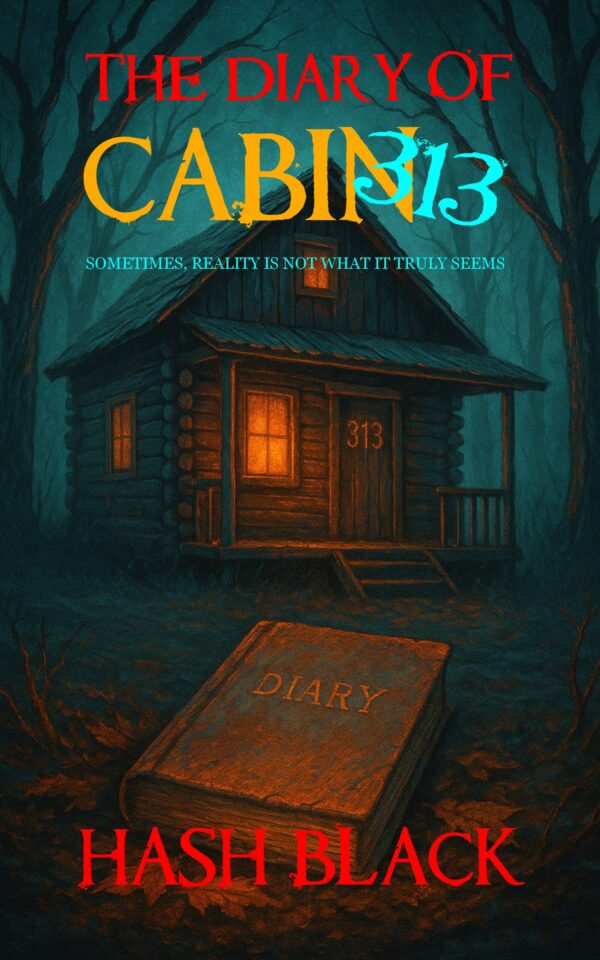
Featured Supernatural Horror Recommendation
If you’re looking for unseen supernatural horror that relies on atmosphere rather than shock, start there. It understands silence. It trusts implication. And it never resorts to cheap interruption.