Fast horror demands reaction.
Slow-burn supernatural horror demands endurance.
While loud, fast-paced horror may provoke an immediate response, it often collapses once the stimulus fades. In contrast, slow-burn supernatural horror reshapes the reader’s emotional state gradually. It introduces unease early, withholds explanation, and allows dread to compound. Consequently, the fear does not spike and disappear—it settles in and stays.
For readers who return to horror repeatedly, this distinction becomes impossible to ignore. Over time, many realise that the most disturbing stories are not the ones that startled them briefly, but the ones that followed them quietly into memory.
What “Slow-Burn” Actually Means in Supernatural Horror
Slow-burn does not mean slow storytelling.
Instead, it refers to how fear is constructed.
In slow-burn supernatural horror, the narrative establishes a sense of normality before introducing disruption. Early disturbances feel small, easily dismissed, or explainable. However, they do not vanish. They repeat. They evolve. They accumulate.
Rather than escalating through spectacle, the story escalates through implication. Tension rises without release. Each scene inherits the unease of the one before it. Nothing resets. Nothing resolves cleanly.
This structure stands in direct contrast to fast horror, where fear relies on repeated shocks. Slow-burn horror denies that rhythm. Instead, it forces the reader to remain inside uncertainty.
Why Gradual Escalation Produces Deeper Fear
Fear thrives on anticipation.
Slow-burn supernatural horror understands this and builds accordingly.
As minor disturbances recur, the reader begins to sense intention. The fear no longer feels accidental. Something appears to be watching, waiting, or pressing closer. Because escalation unfolds gradually, the reader starts anticipating threat long before it arrives.
This anticipation becomes more disturbing than any single event. Silence grows heavier. Stillness feels loaded. The absence of action becomes a warning rather than relief.
Atmosphere as a Mechanism, Not Decoration
In slow-burn supernatural horror, atmosphere does not decorate the story—it drives it.
Mood replaces momentum. Instead of accelerating plot, the narrative deepens emotional pressure through repetition, environment, and subtle distortion of routine. Ordinary spaces feel compromised. Familiar objects feel altered. Safety becomes uncertain.
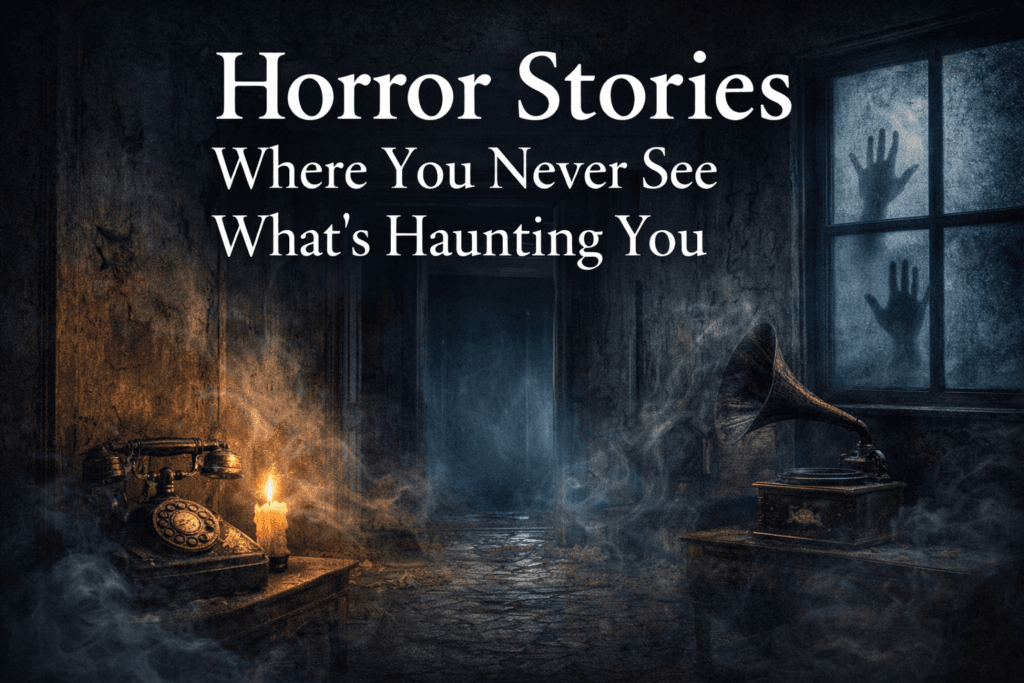
This is where slow-burn horror naturally overlaps with quiet terror. Nothing explodes. Nothing announces itself. Yet the reader feels surrounded by unease, unable to locate its source.
When the Familiar Becomes Hostile
One of the most effective uses of slow-burn horror occurs when the threat embeds itself within a familiar space. Homes, in particular, amplify fear because they represent refuge. When that refuge begins to feel aware—or worse, complicit—escape feels impossible.
This is why haunted domestic settings play such a central role in slow-burn supernatural horror. The fear does not come from intrusion alone, but from corruption. The environment itself begins to participate.
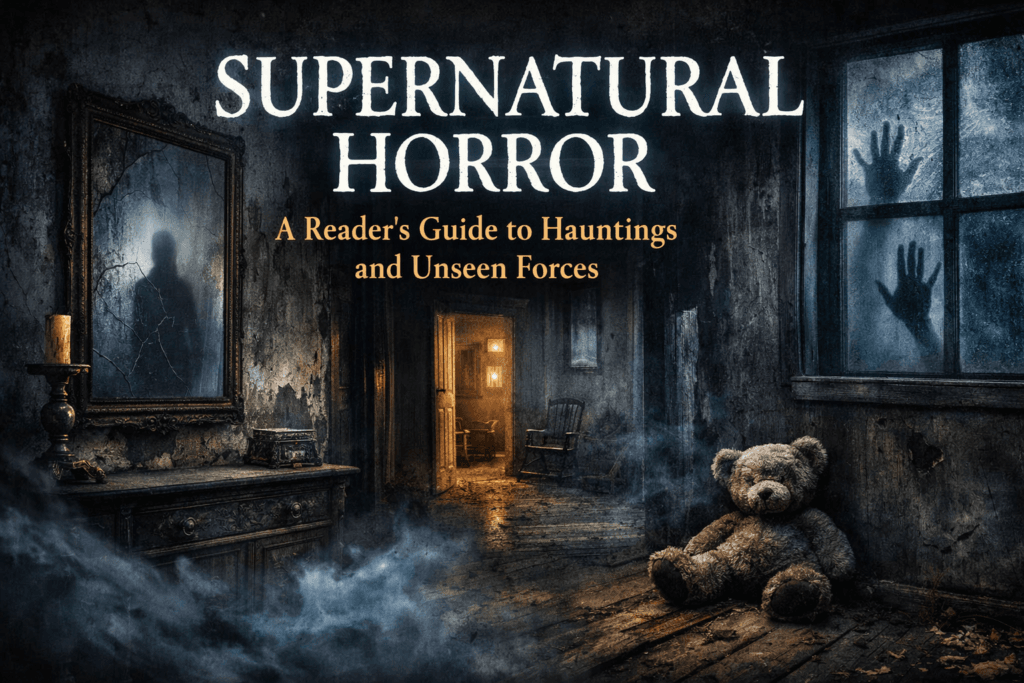
That approach defines slow-burn haunted house horror where the home itself becomes the threat. Instead of rushing toward revelation, the story allows dread to seep into walls, rooms, and reflections, forcing the reader to question how long the space has been watching.
Because the escalation unfolds patiently, the horror does not feel imposed. It feels inevitable.
Why Slow-Burn Horror Often Feels Uncomfortably Real
Another reason slow-burn supernatural horror resonates so deeply is its resemblance to real fear.
In real life, terror rarely arrives fully formed. Instead, it grows through doubt, denial, and gradual recognition. Slow-burn horror mirrors this emotional process. Rational explanations coexist with unease until they no longer hold.
Because the emotional progression feels familiar, the supernatural elements feel grounded—even when they defy logic. This realism explains why slow-burn horror often aligns with stories that feel uncomfortably real rather than theatrical or exaggerated.
The fear emerges from believable reactions, not exaggerated spectacle.
Delayed Confirmation and the Power of Ambiguity
A defining trait of slow-burn supernatural horror is delayed confirmation.
The story may suggest a presence early, yet it refuses to validate that suspicion outright. Instead, it allows uncertainty to coexist with dread. The reader questions whether the threat is supernatural, psychological, or something in between.
This ambiguity sustains tension. When confirmation finally arrives, it feels unavoidable rather than surprising. The horror lands because it fulfills a long-building expectation instead of interrupting it.
Why Slow-Burn Horror Rejects Jump Scares
Jump scares interrupt anticipation.
Slow-burn horror depends on it.
Sudden shocks reset emotional tension, while slow-burn horror works to preserve and intensify it. As a result, jump scares clash with slow-burn structure at a fundamental level. They break immersion and collapse atmosphere.
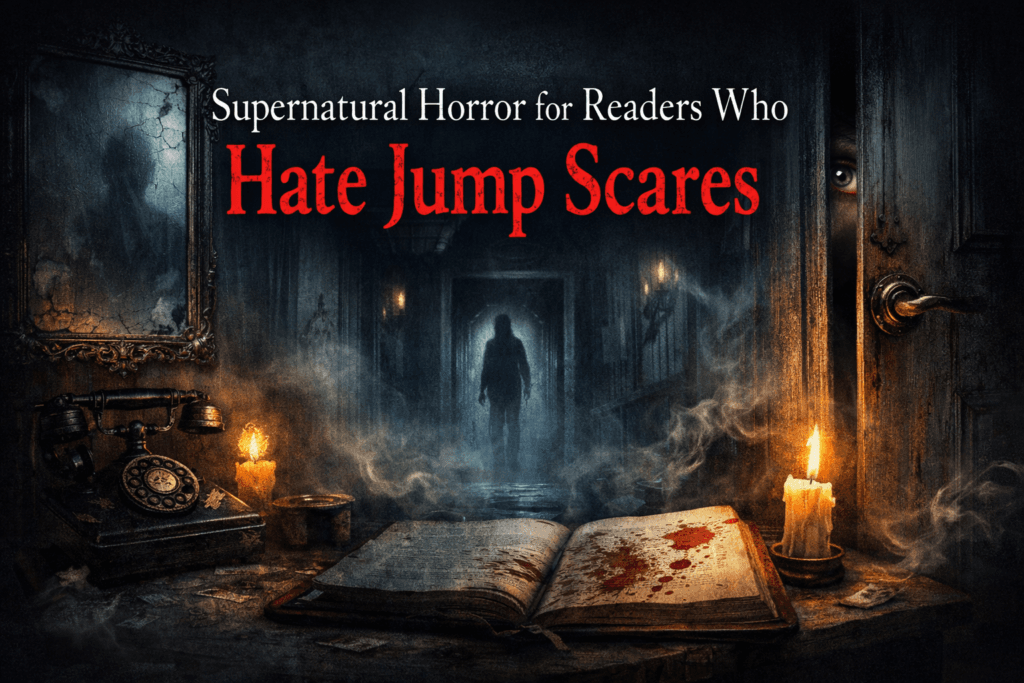
This incompatibility explains why readers drawn to slow-burn horror often seek out supernatural horror for readers who hate jump scares. Both styles prioritise continuity of dread over momentary reaction.
Silence as Pressure
Silence plays an active role in slow-burn supernatural horror.
Moments without action are not empty; they are charged. Each pause invites anticipation. Each quiet stretch encourages projection. The reader imagines intrusion long before it happens.
By refusing to fill every moment, the story turns waiting into tension. The reader becomes complicit, carrying the fear forward internally.
Why Slow-Burn Horror Rewards Attention
Fast horror allows skimming.
Slow-burn horror punishes it.
Because fear unfolds gradually, inattentive reading dulls the effect. However, engaged readers experience a layered, immersive descent. Subtle cues gain importance. Early scenes acquire new meaning. Patterns emerge slowly.
This depth encourages reflection after the story ends. Readers replay moments, reconsider implications, and recognise how early details foreshadowed later developments.
Why Slow-Burn Horror Lingers
The most important difference between slow-burn supernatural horror and faster alternatives lies in aftereffect.
Slow-burn horror does not resolve cleanly. It leaves emotional residue. Because the story prioritises atmosphere, ambiguity, and escalation, the reader does not receive full closure. Instead, the unease follows them into silence and memory.
That lingering quality explains why many experienced horror readers gravitate toward slow-burn narratives. The fear does not exhaust itself. It stays.
Final Thought
Slow-burn supernatural horror does not hurry.
It does not shout.
It does not demand reaction.
Instead, it waits.
For readers willing to meet it on those terms, slow-burn horror offers one of the most enduring and disturbing experiences the genre can provide.